
Cambodia is often framed through Angkor Wat, majestic, timeless, and undeniably iconic. But beyond the temples lies another Cambodia: one shaped not by stone, but by people, water, land, and the quiet resilience of rural communities.
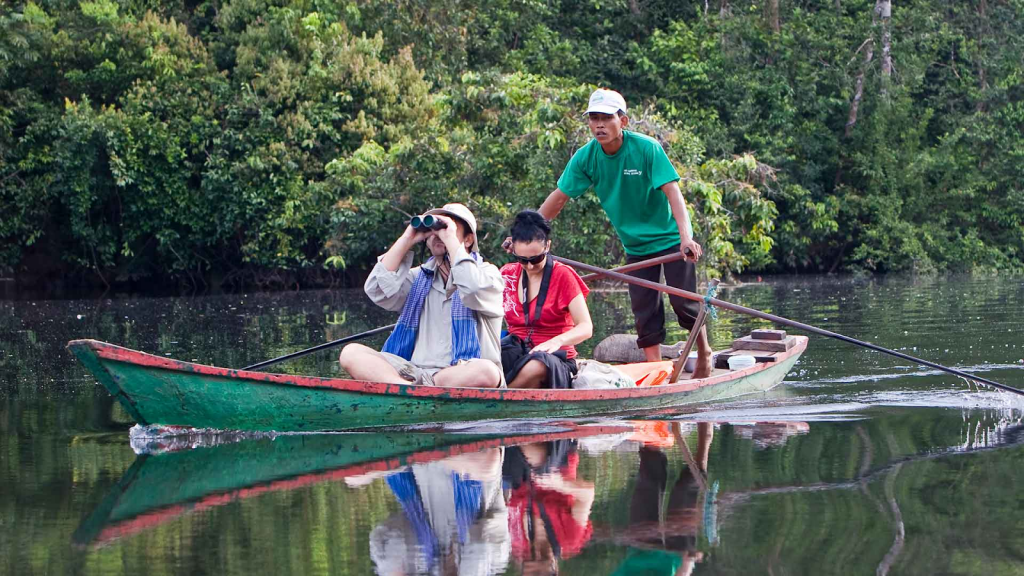
Community-based tourism (CBT) is where Cambodia reveals itself most honestly, not as a performance, but as a living system where travel, when done right, can generate real impact. From the slow rhythms of Battambang to the fluid life on Tonle Sap, these are experiences that go beyond observation—inviting participation, understanding, and responsibility.
1. What Community-Based Tourism Really Means in Cambodia
Community-based tourism in Cambodia is often misunderstood as simply “visiting a village” or “supporting locals.” In reality, it is a far more structured and intentional model, one that sits at the intersection of development, conservation, and cultural preservation.
1.1 Defining CBT Beyond Surface-Level Travel
At its core, CBT is about shifting ownership and agency back to the community.
- Local ownership: Experiences are designed, managed, or co-managed by the community itself, ensuring that tourism does not extract value but redistributes it.
- Economic retention: A significant portion of tourism revenue remains within the village or network, funding livelihoods, education, and infrastructure.
- Cultural integrity: Traditions are not staged for tourists but shared on the community’s own terms.
This distinction is critical, because without it, “community-based” risks becoming just another marketing label.
CBT is not defined by where you go, but by how value flows and who holds control.
1.2 Why Cambodia Is a Natural Fit for CBT
Cambodia’s socio-economic and geographic context makes it particularly suited to this model.
- Rural population concentration: A large proportion of Cambodians live outside major cities, where tourism can directly support local economies.
- Strong cultural continuity: Despite rapid development, many communities retain deeply rooted traditions, crafts, and agricultural practices.
- Environmental sensitivity: Ecosystems like Tonle Sap require models that balance tourism with conservation.
These factors create both an opportunity and a responsibility: tourism can either disrupt fragile systems or reinforce them.
Cambodia doesn’t just benefit from CBT, it requires thoughtful tourism models to sustain its cultural and ecological balance.
2. Battambang: Where Rural Cambodia Still Moves at Its Own Pace
If Siem Reap represents Cambodia’s global tourism face, Battambang offers something quieter, slower, and arguably more revealing.
2.1 A Landscape Shaped by Agriculture and Craft
Battambang is often described as Cambodia’s “rice bowl,” but this label only scratches the surface.
- Agricultural backbone: Rice fields, fruit farms, and small-scale production define both the economy and daily life.
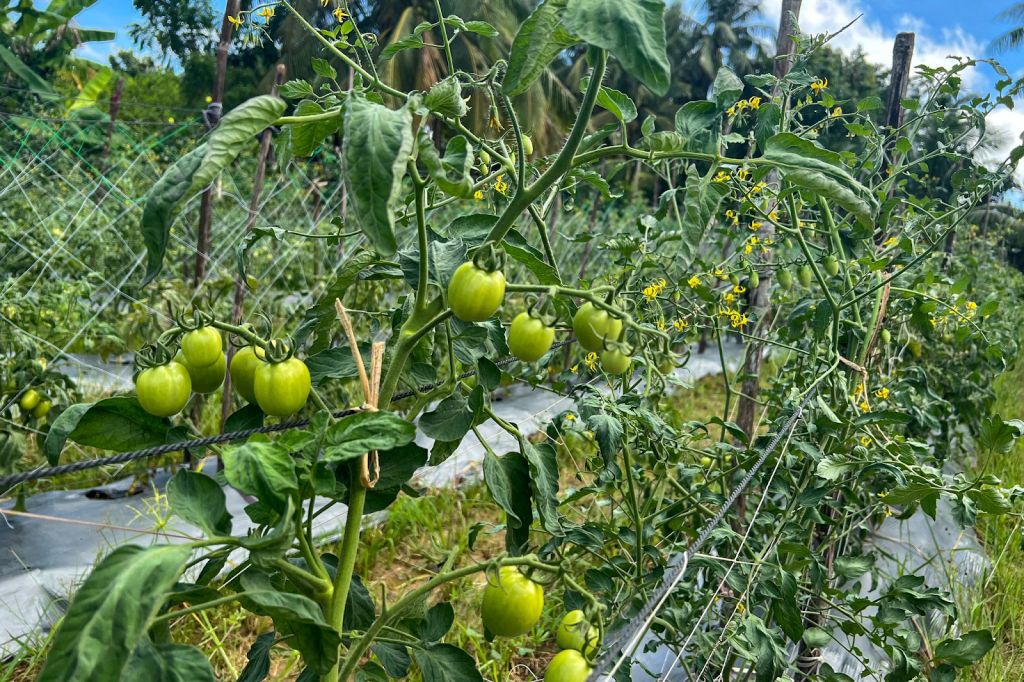
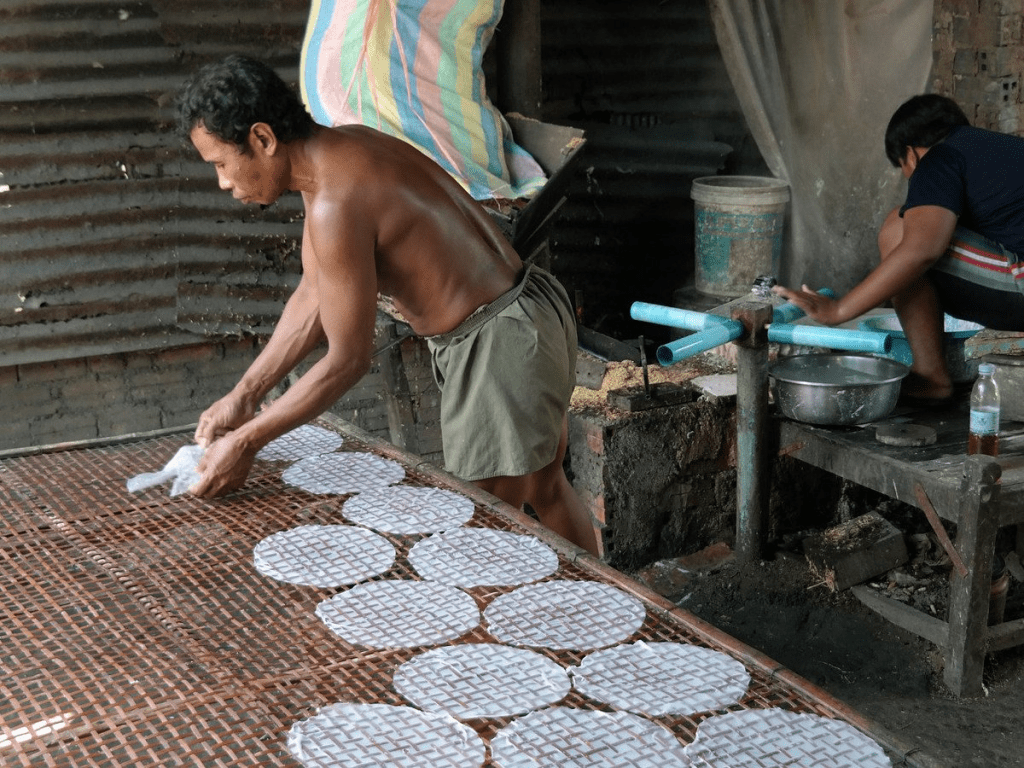
- Artisan traditions: From rice paper making to prahok fermentation, knowledge is passed through generations.
- Colonial-era architecture: A subtle reminder of layered history, blending with local life rather than dominating it.
What makes Battambang distinct is not a single attraction, but the continuity of everyday practices.
2.2 Meaningful Encounters, Not Curated Performances
In a well-designed CBT experience, Battambang is not “shown”; it is shared.
- Farm visits with context: Understanding not just what is grown, but how seasons, markets, and climate shape decisions.
- Hands-on craft experiences: Participating in production processes that are still economically relevant, not recreated for tourism.
- Conversations over transactions: Time is built into itineraries for genuine interaction, not rushed stops.
This shifts the role of the traveler: From observer to participant.
The value of Battambang lies in depth, not diversity of attractions.
3. Tonle Sap: Life on Water and the Complexity of Sustainable Tourism
If Battambang is about continuity, Tonle Sap is about adaptation: Constant, seasonal, and deeply interwoven with survival.
3.1 Understanding Tonle Sap as a Dynamic Ecosystem
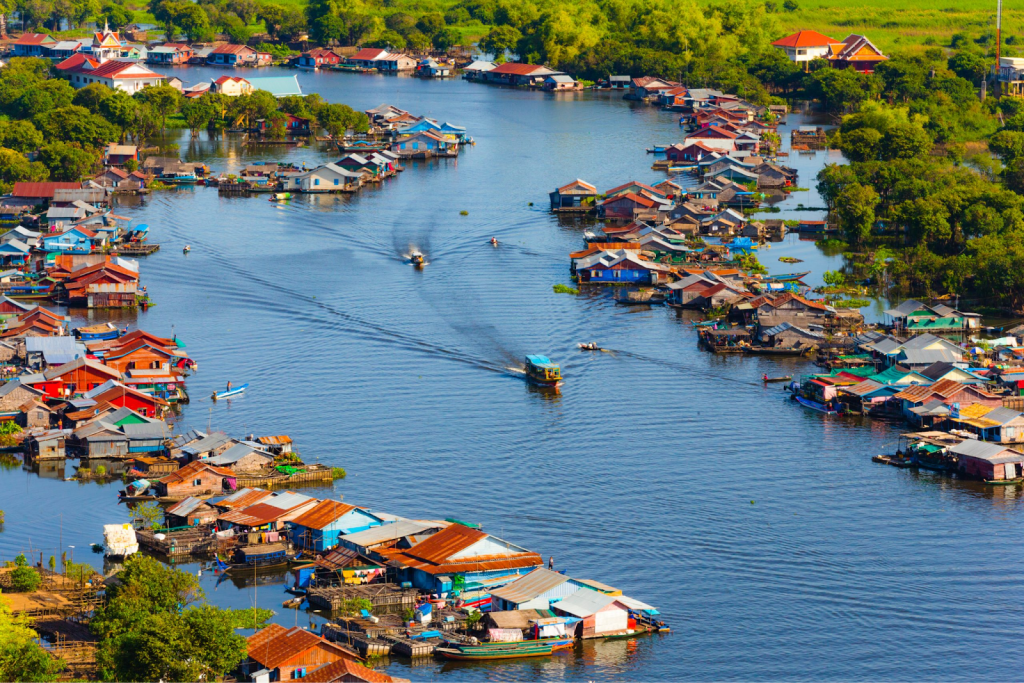
Tonle Sap is not static, it expands and contracts dramatically with the Mekong’s flow.
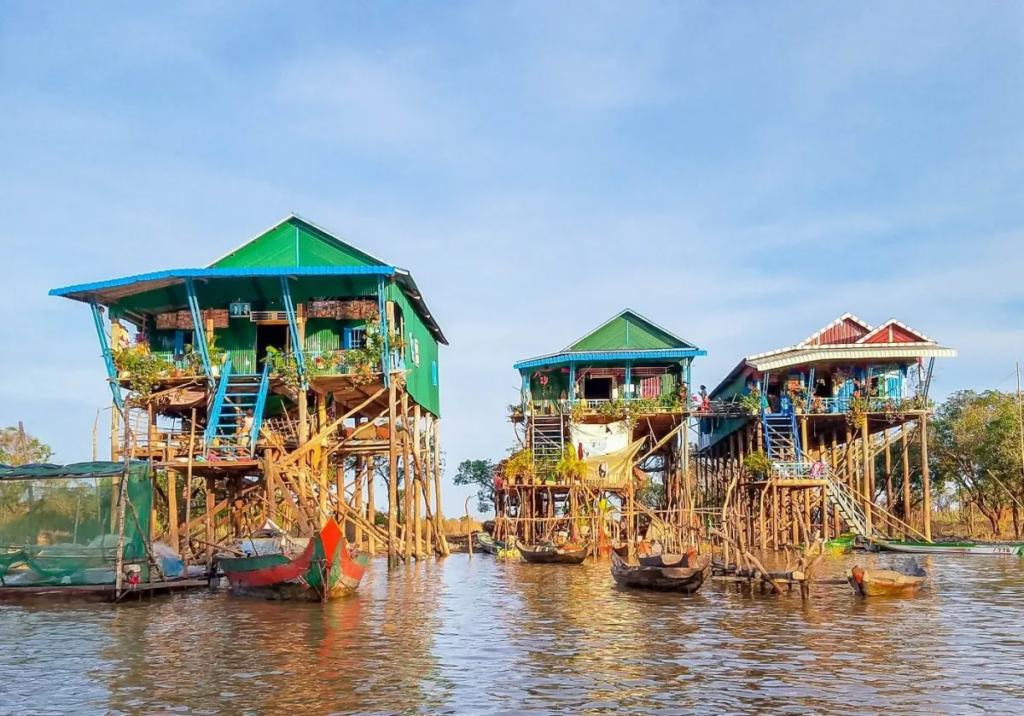
- Seasonal transformation: Water levels can multiply several times, reshaping entire settlements.
- Floating and stilted architecture: Homes, schools, and markets adapt to shifting conditions.
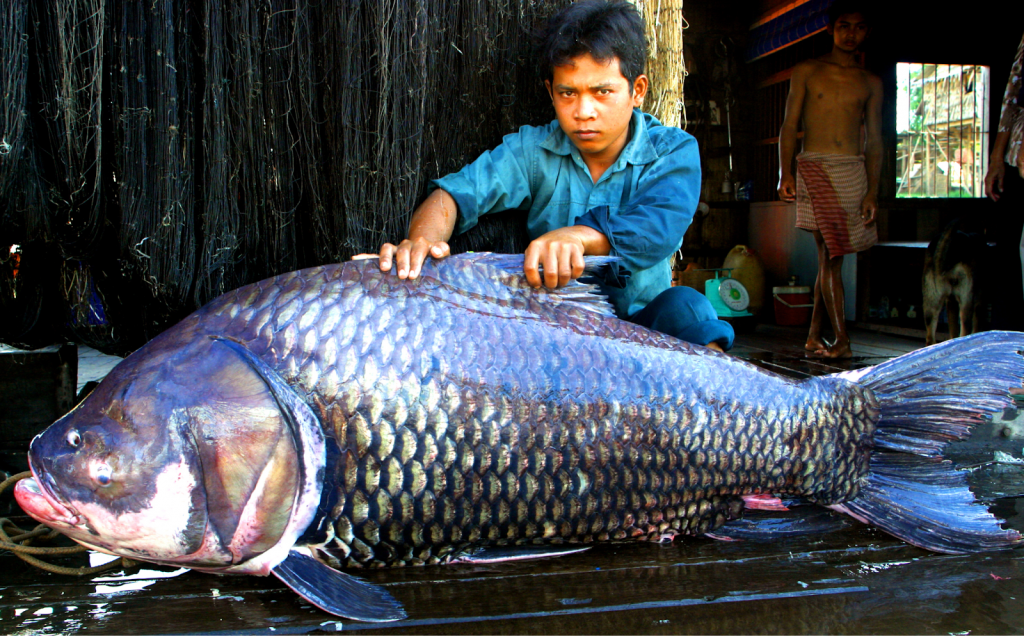
- Fishing-based livelihoods: One of the world’s most productive inland fisheries sustains millions.
Without understanding this system, any visit risks becoming superficial.
3.2 The Tension Between Tourism and Reality
Tonle Sap has long been part of mainstream itineraries, but not always in ways that benefit communities.
- Short, observational tours: Often prioritize speed over understanding.
- Economic leakage: Limited benefit flows back to residents.
- Cultural misrepresentation: Communities reduced to visual spectacle.
This creates a paradox: high visitation, low impact.
3.3 Rebuilding Tourism Through Community-Led Models
CBT initiatives on Tonle Sap aim to correct this imbalance.
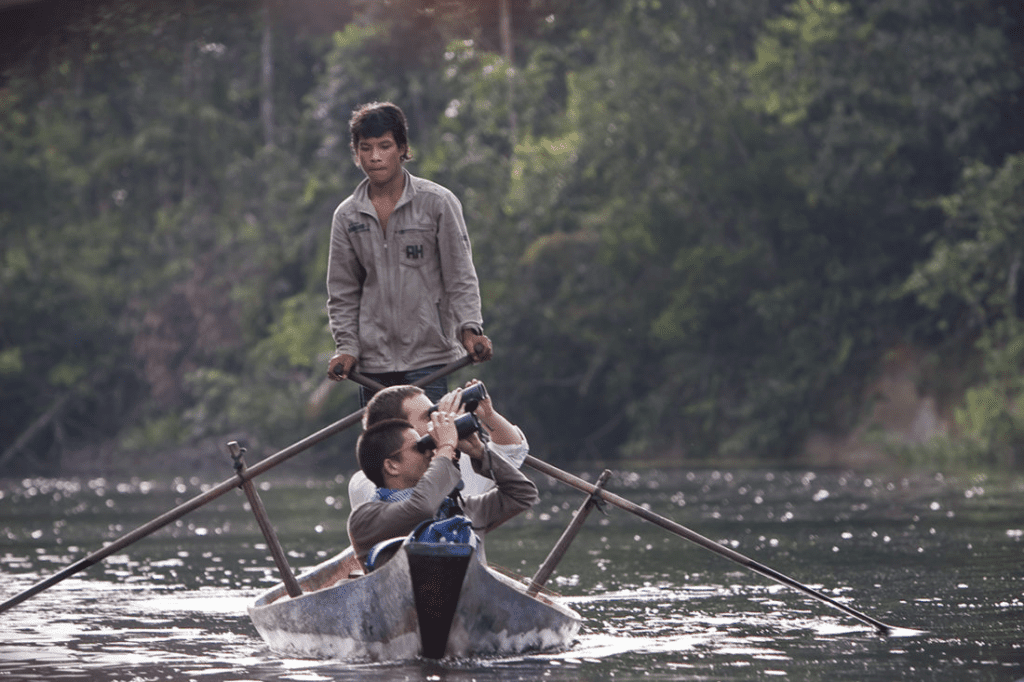
- Locally guided experiences: Residents interpret their own environment, offering context outsiders cannot.
- Smaller-scale engagement: Reducing environmental and social pressure.
- Revenue reinvestment: Supporting education, waste management, and community projects.
On Tonle Sap, meaningful tourism is not about access, it is about accountability.
4. Designing Experiences That Actually Empower Communities
Not all “community-based” experiences are equal. The difference lies in design, intent, and execution.
4.1 From Itinerary to Impact: What Needs to Change
For CBT to work, it must be embedded into the structure of the experience, not added as an afterthought.
- Time allocation: Slower itineraries that allow real interaction.
- Group size control: Ensuring experiences remain personal and non-intrusive.
- Narrative framing: Providing context before and during visits.
4.2 Measuring Impact Beyond Feel-Good Travel
Impact should be tangible, not assumed.
- Income distribution: Clear mechanisms for how revenue supports communities.
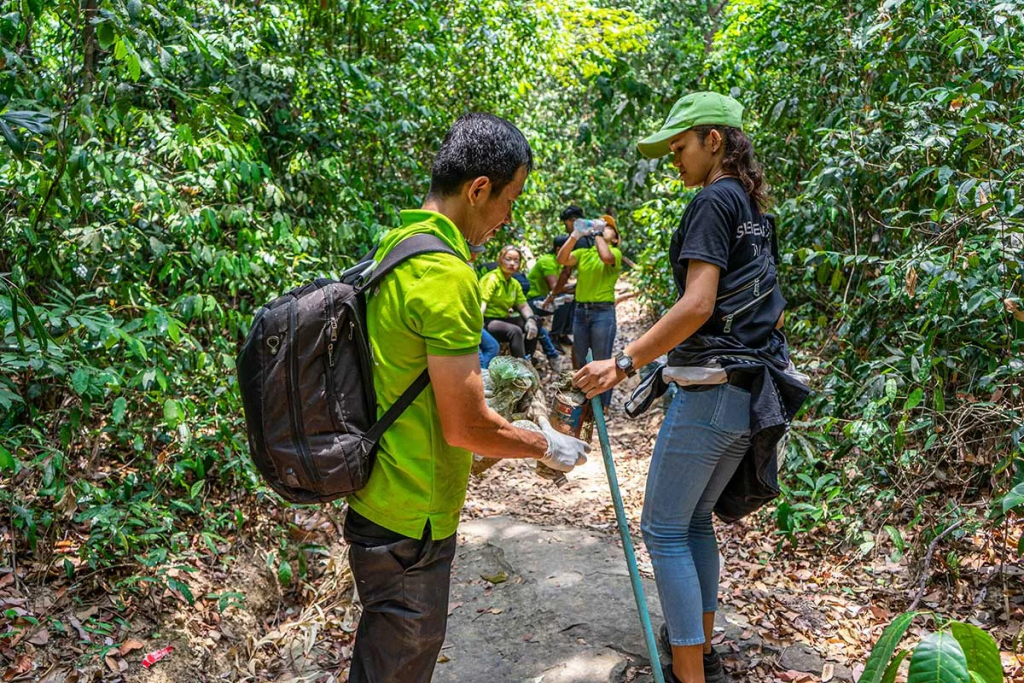
- Capacity building: Training and empowering local hosts.
- Long-term partnerships: Moving beyond one-off visits.
4.3 The Role of Responsible Travel Designers
Operators play a critical role in bridging travelers and communities.
- Curation with accountability: Selecting partners based on real impact, not convenience.
- On-ground relationships: Maintaining continuous engagement with communities.
- Adaptive design: Adjusting experiences based on feedback and changing conditions.
Empowerment is not a byproduct, it is the result of intentional design.
5. The Mango Tiger Way: People, Places, Product with Purpose
What distinguishes a meaningful CBT experience is not just where you go, but who you connect with, how the experience is built, and why it exists. This is where Mango Tiger’s approach moves beyond theory into practice.
5.1 People: Experiences Anchored in Real Individuals
Rather than building experiences around services, Mango Tiger starts with real people, specific individuals whose lives and perspectives shape the journey itself.
- People as the core, not the layer: Experiences are built around real individuals such as Nana (tuk-tuk driver), Mr. Try (local guide), and Mr. Tong Key (homestay host), rather than interchangeable service roles. This makes each journey inherently personal and difficult to replicate.
- Lived stories over scripted narratives: What travelers hear and experience comes from lived reality, not rehearsed storytelling. Mr. Try, for example, shares Cambodia’s history through personal perspective and memory, adding emotional depth that goes beyond factual narration.
- Access through relationships, not logistics: Interactions, like dining with Mr. Tong Key’s family or exploring Siem Reap with Nana, are not staged stops, but the result of long-term relationships built on trust between Mango Tiger and local partners.
This approach transforms the experience from being “served” to being personally hosted within someone’s world.
5.2 Places: Designing Around Living Environments, Not Attractions
Mango Tiger approaches destinations not as a checklist of attractions, but as living systems that must be understood before they can be meaningfully experienced.
- Context-first experience design: Every location, such as Tonle Sap or Bakong village, is approached through its environmental, cultural, and economic context before activities are designed. Kampong Khleang, for instance, is framed as a water-dependent ecosystem, not just a scenic boat route.
- Places as systems, not stops: Experiences like onboard cooking in Kampong Khleang are not standalone activities, they reflect the relationship between water, food sourcing, and daily life in floating communities. Travelers engage with how the system functions, not just how it looks.
- Integration into local rhythms: In Bakong village, the journey flows naturally from market visits to farming activities, following the actual rhythm of rural life rather than imposing a pre-designed tourist structure.
As a result, destinations are not simply visited, they are interpreted, understood, and experienced in context.
5.3 Product with Purpose: Where Experience Meets Impact
What turns these encounters into something meaningful is how they are structured. Mango Tiger’s “Products with Purpose” are designed so that they do not exist solely for tourism, they remain relevant to the community itself.
The 5-day tuk-tuk journey across Cambodia is a clear example. On the surface, it offers a unique way to explore the countryside. But layered within it are:
- Homestay experiences that bring direct income to local families
- Culinary experiences rooted in authentic, everyday food culture
- Visits to lesser-known historical sites beyond Angkor
- Opportunities to participate in small-scale community projects
This creates a multi-dimensional product where travel is not just consumptive, but participatory.
Similarly, the floating cooking experience in Kampong Khleang is not an isolated activity. It ties into local fishing economies, food sourcing, and the realities of life on water. The experience generates value not just economically, but in how it builds awareness and appreciation for a fragile ecosystem.
In both cases, the product is doing more than entertaining, it is supporting, sustaining, and contextualizing.
5.4 How It All Connects: A System, Not a Collection of Experiences
What becomes clear across these examples is that Mango Tiger is not assembling experiences, it is building a connected system.
- People are not added to itineraries, they define them
- Places are not visited, they are interpreted
- Products are not packaged, they are constructed with intent
This is why the experiences feel cohesive rather than fragmented. A tuk-tuk journey connects naturally to a homestay. A market visit flows into farming. A boat ride becomes a cooking experience.
Nothing feels inserted for the sake of variety, everything is logically and culturally connected.
5.5 About Mango Tiger DMC: Regional Reach, Local Depth
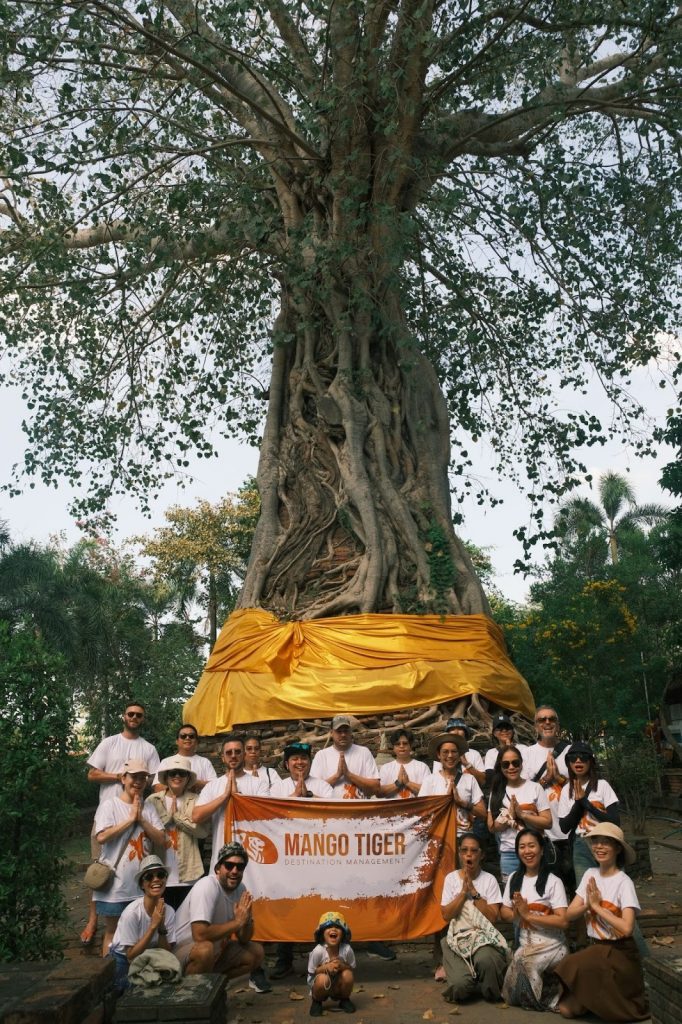
Mango Tiger operates across Southeast Asia, but its strength lies in how it balances regional scale with local depth.
With teams on the ground in multiple countries, the company maintains direct relationships with communities, allowing it to move beyond surface-level product design. This structure enables:
- Consistent quality control across destinations
- Deep, location-specific knowledge
- The ability to build and maintain long-term community partnerships
Rather than acting as a middle layer, Mango Tiger positions itself as a bridge; translating local realities into meaningful travel experiences for a global audience.
Beyond the temples, Cambodia offers something far more complex and far more rewarding.
For those willing to slow down, to engage, and to look beyond the obvious, community-based tourism opens a different kind of journey, one where travel becomes less about seeing, and more about understanding.
If you’re looking to design journeys that go deeper where every experience carries meaning, Mango Tiger can help you get there. Book now.
