
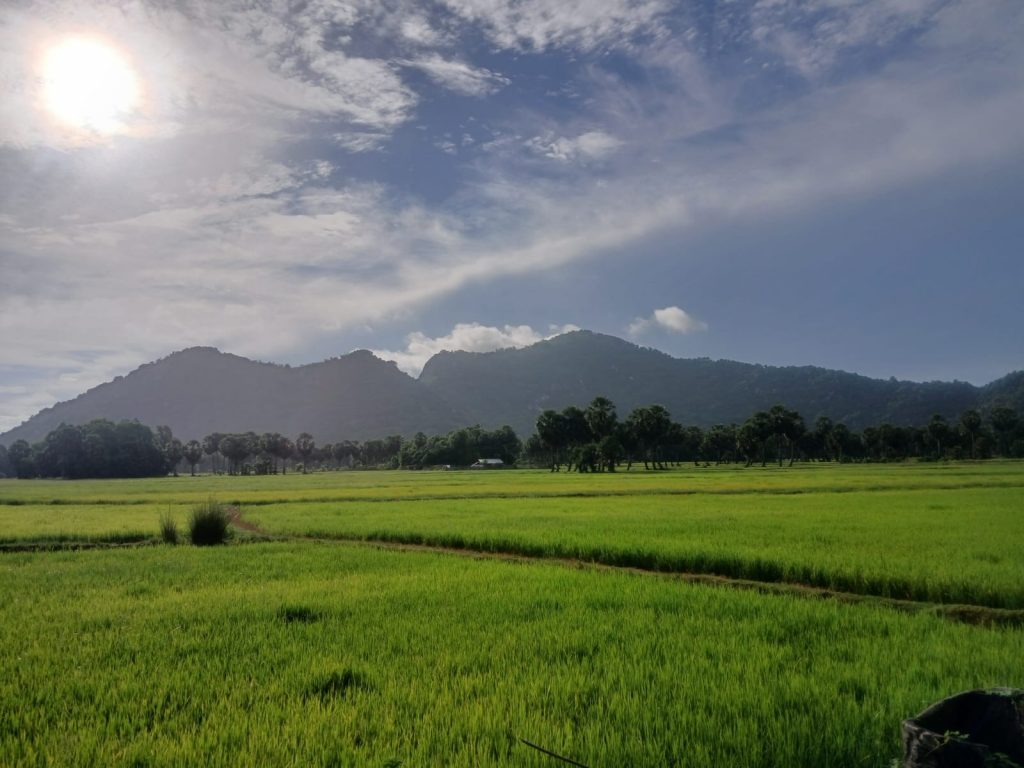
Forget the floating markets and tourist boats for a moment. West of Long Xuyen, close to the Cambodian border, the flat rice country of the Mekong Delta suddenly folds upward into a cluster of green peaks known as Bảy Núi, the Seven Mountains – one of the few places in the entire Delta where the horizon isn’t a straight line. This is Tri Tôn, in An Giang province, and it’s the kind of place we keep coming back to when a traveler tells us they’ve “already done” the Mekong Delta and want to see what’s next.
1. Why Tri Tôn Is a Different Kind of Mekong Delta
Most first-time visitors picture the Delta as one continuous plain of rice paddies and canals, and for hundreds of kilometres, that’s exactly right. Tri Tôn is the exception, and understanding why it looks so different is the first step to appreciating it.
1.1 Beyond the Floating Markets
The Mekong Delta’s signature experience – a wooden boat weaving between vendors at a floating market – is worth doing once. But it’s also the single most repeated image in every Vietnam itinerary, and regional tourism planners themselves have flagged the problem.
- A region working to diversify its own product: Vietnamese tourism officials have openly acknowledged that Delta attractions can feel repetitive and lacking distinctiveness, with short stays and low return visits as a result – exactly the gap a place like Tri Tôn fills.
- An Giang is positioned for something different: Under the region’s new tourism strategy, An Giang is being developed specifically around spiritual, ecological, and border tourism – a different product entirely from the canal-and-market circuit further east.
- A genuine change of landscape, not just scenery: at 187 kilometres southwest of Ho Chi Minh City, Tri Tôn sits close enough to reach on a well-planned tailor-made journey, yet far enough off the standard route to feel like a discovery.
- Slower travel by design: quiet roads, small villages, and a pace built for independent travelers who’d rather wander than follow a script.
1.2 Where Mountains Rise From the Rice Fields
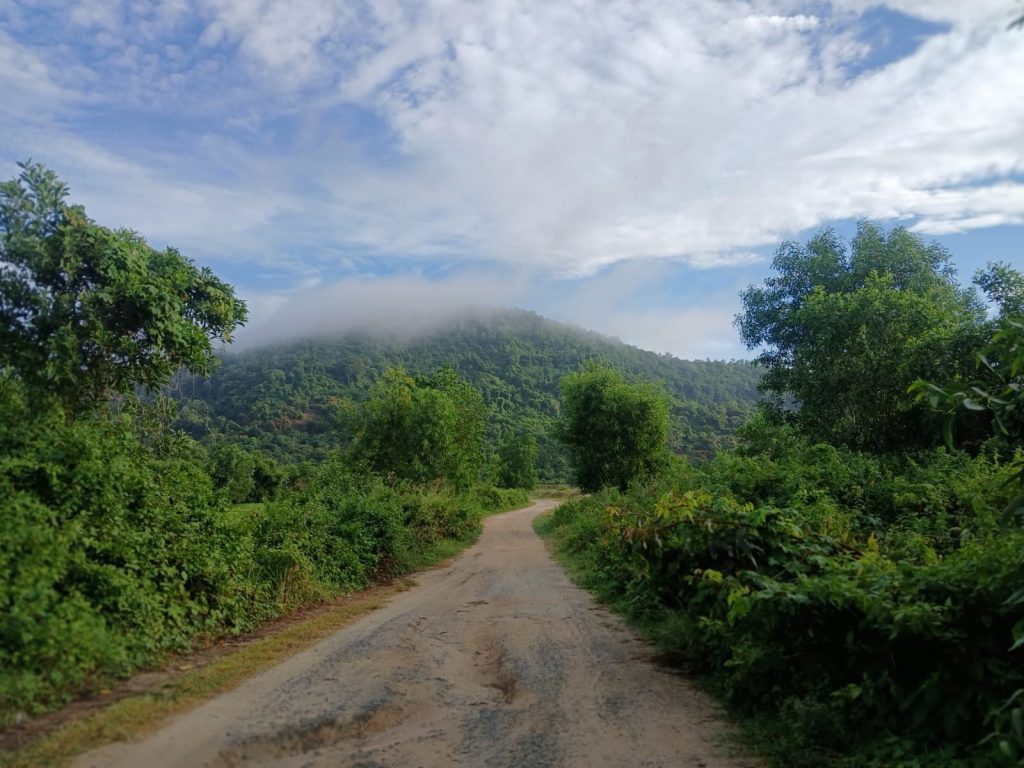
The Seven Mountains region, known locally as Bảy Núi or Thất Sơn, is the geological oddity that makes Tri Tôn feel like nowhere else in southern Vietnam.
- A cluster of granite peaks in a delta of mud: Bảy Núi (the “Seven Mountains”) rises abruptly from the surrounding rice plains along the Cambodian border, an isolated massif in a region defined almost everywhere else by flatness.
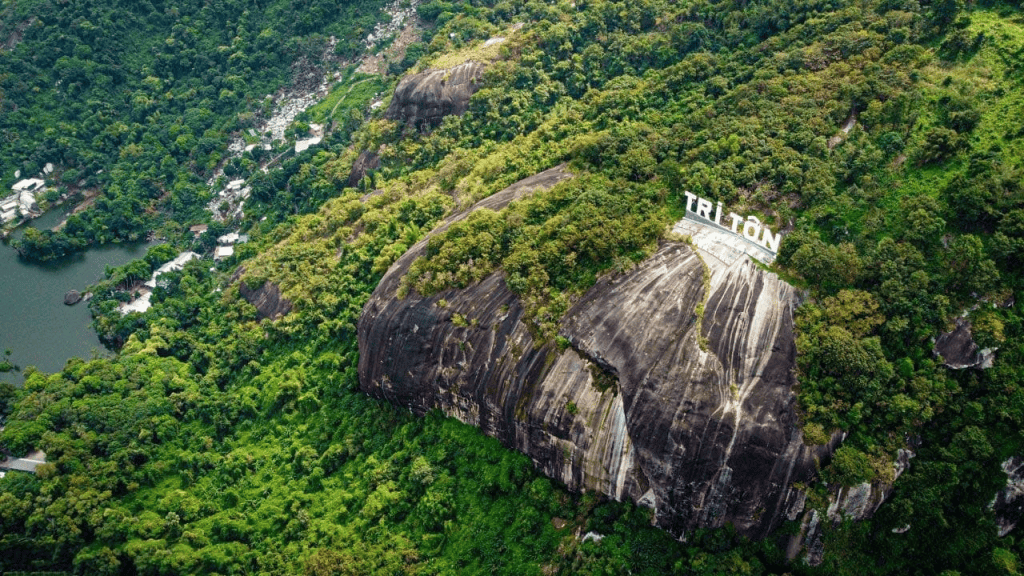
- A borderland with its own identity: the mountains straddle Tri Tôn and neighbouring Tịnh Biên district, forming a natural boundary that has shaped trade, migration, and culture for centuries.
- A landscape still largely unmapped for travelers: outside of a handful of pilgrimage sites, most of the Seven Mountains area sees very little international tourism, which is part of what makes it feel genuinely off the trail.
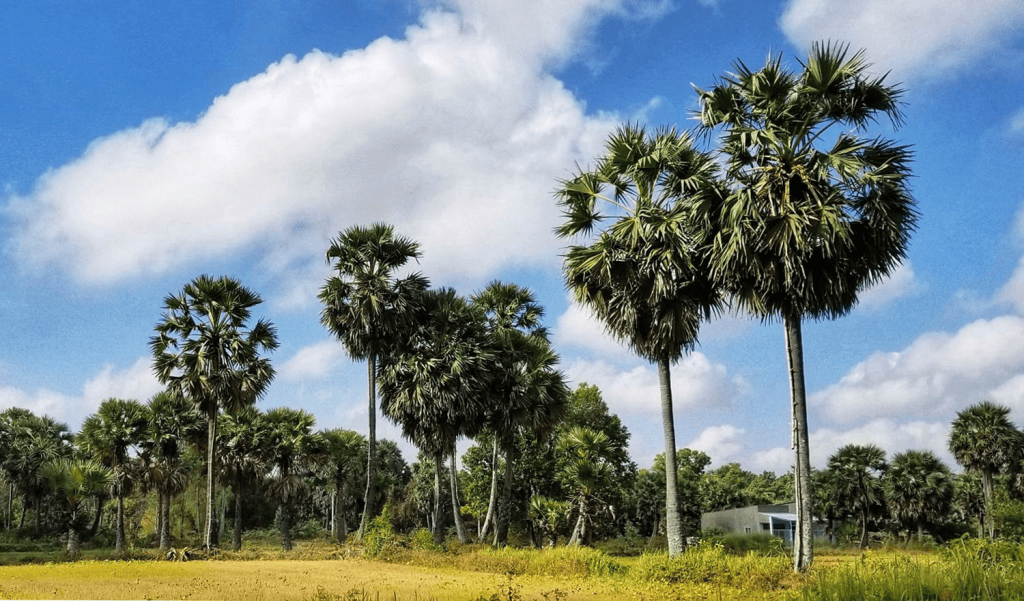
- Sugar palms as a visual signature: tall thốt nốt palms rise above the rice fields at the foot of the mountains, giving Tri Tôn a silhouette unlike anywhere else in the Delta.
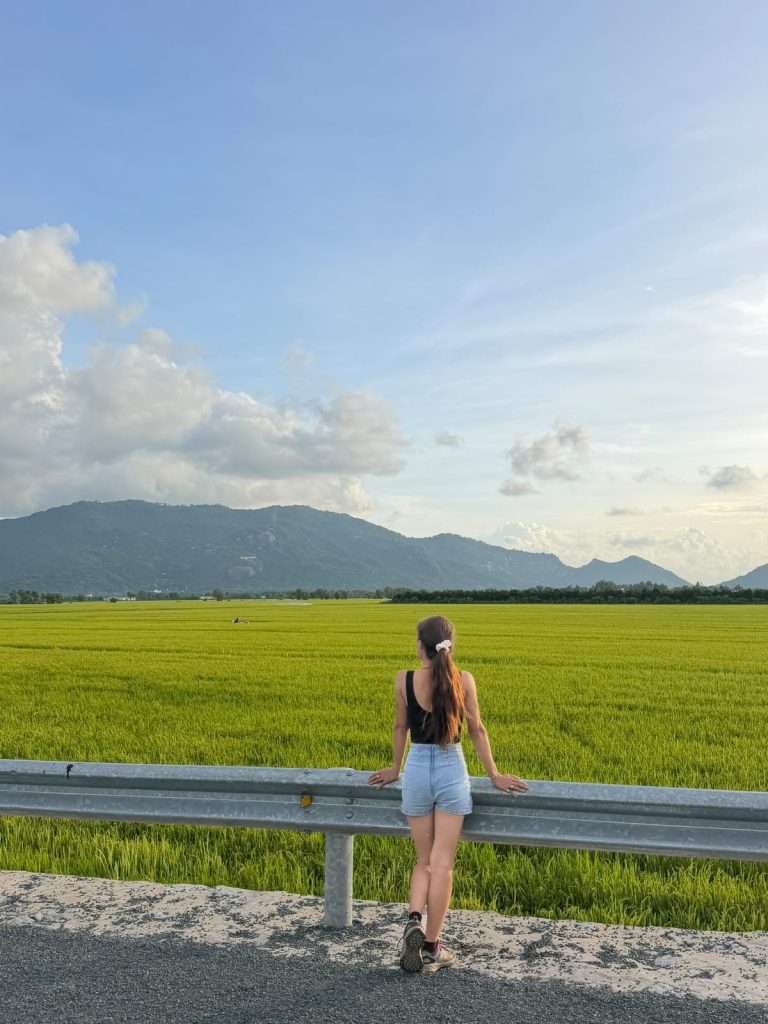
Tri Tôn isn’t a variation on the usual Mekong Delta trip – it’s a genuinely different landscape hiding inside the same province.
2. Tà Pạ: An Giang’s Hidden Rice-and-Lake Landscape
If Tri Tôn has one signature image, it’s Tà Pạ – a patchwork of rice paddies running up against a small hidden lake, framed by the mountains behind it.
2.1 A Lake Born From an Old Quarry
Tà Pạ Lake looks entirely natural, but its story is more recent – and more interesting – than it first appears.
- Once a working stone quarry: Tà Pạ Lake formed after decades of stone extraction left a deep pit that gradually filled with rainwater, turning an industrial site into one of An Giang’s most photographed landscapes.
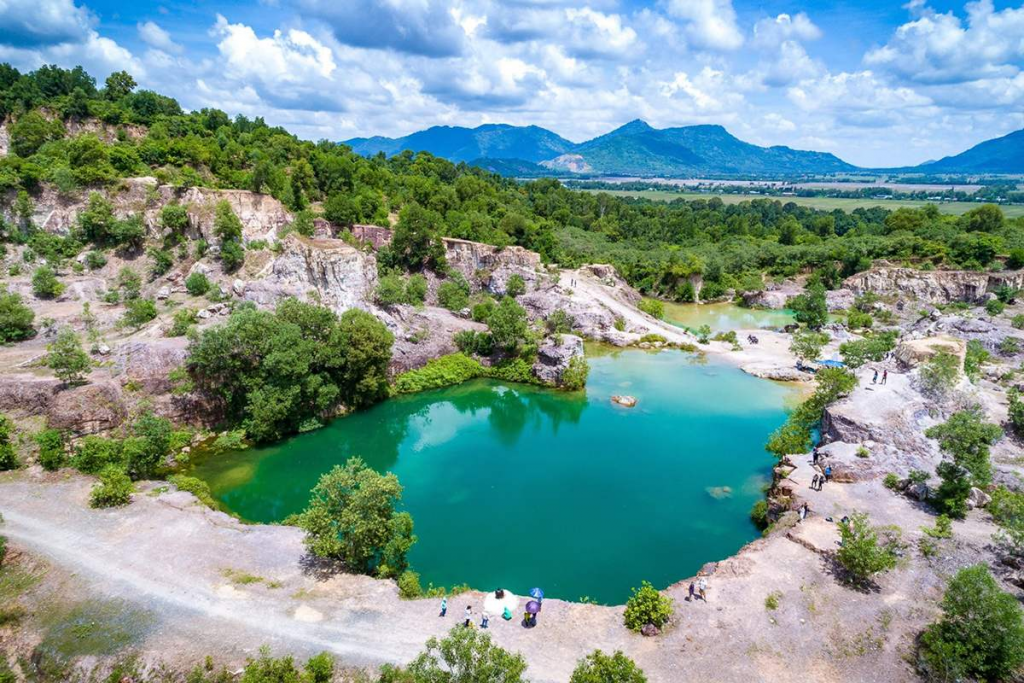
- Water that changes colour through the day: the lake shifts from turquoise to emerald depending on the light and the angle, framed by the sheer rock walls left behind by the quarrying.
- A pagoda watching over the fields: Tà Pạ Pagoda, in bright yellow Khmer-style architecture, sits on a small hill just 1.5 kilometres away, offering a short climb and a panoramic view across the rice paddies below.
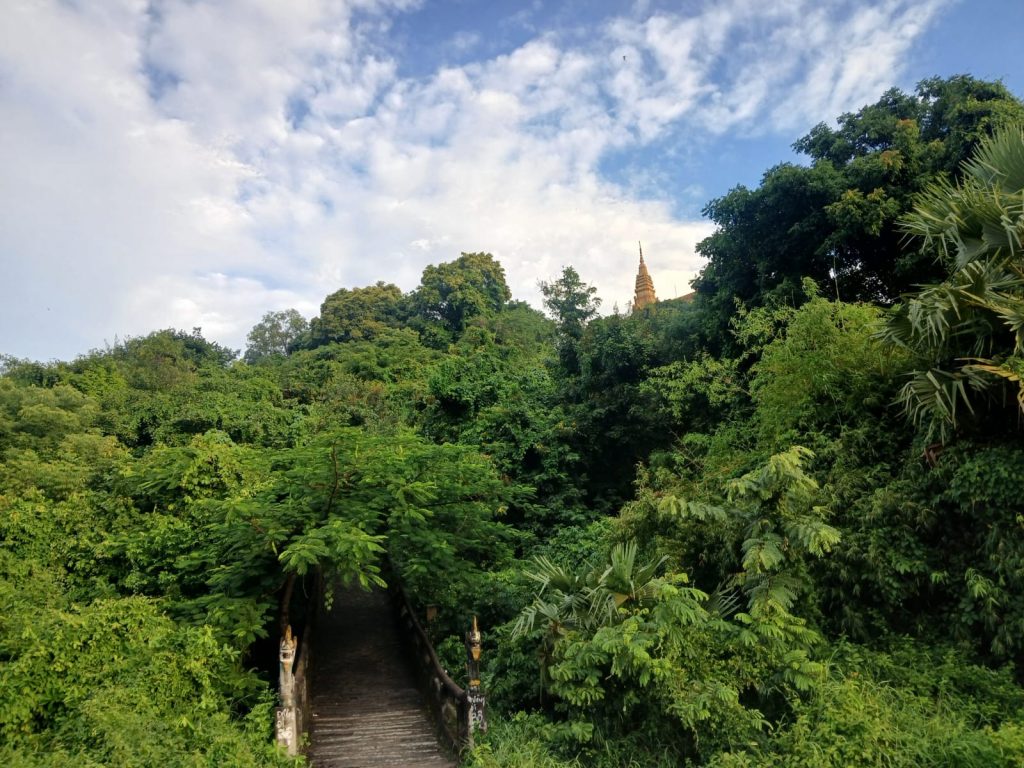
- A landscape you’re unlikely to share with a tour bus: unlike the Delta’s more established stops, Tà Pạ still receives relatively few international visitors, and it shows in how quiet it feels even at sunrise.
2.2 Chasing the Golden Harvest
Timing matters enormously here. Tà Pạ looks like a different place depending on the season, and getting it right is worth planning around.
- Harvest season is the money shot: from around October through November, the rice fields turn a deep gold just before harvest, producing the classic postcard scene the area is known for.
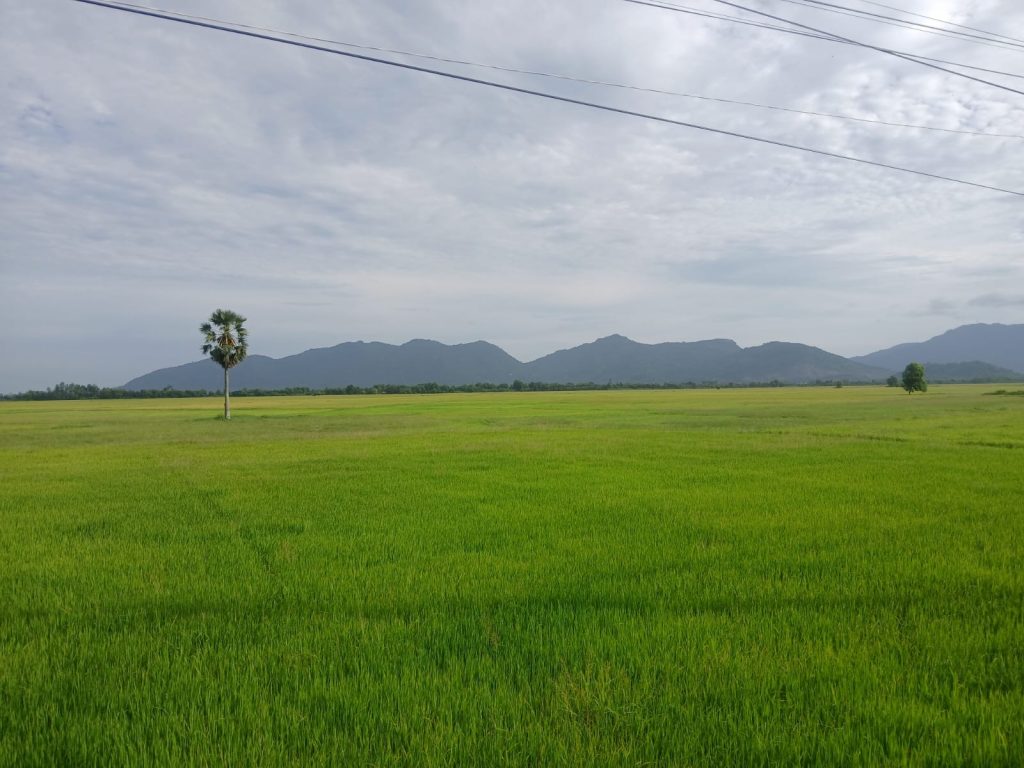
- Flood season reveals a mirror landscape: between August and November, seasonal Mekong flooding submerges parts of the Ta Pa fields, turning them into shallow, reflective water that doubles the mountains in the sky above.
- Early morning or late afternoon light: the best photography window is either just after sunrise or between 3 and 5pm, when low light brings out the texture of the paddies and the colour of the lake.
- Two wheels, at a gentle pace: the flat terrain around Tà Pạ makes it genuinely enjoyable to explore by bicycle, though the heat and longer-than-expected distances make a guided route worth having.
Tà Pạ rewards patience – a quarry that became a lake, and rice fields that turn to gold on their own schedule.
3. Khmer Culture in the Shadow of the Seven Mountains
Tri Tôn is one of the most concentrated places in Vietnam to experience Khmer Krom culture – a community whose traditions run distinctly different from the ethnic Vietnamese Delta further east.
3.1 Pagodas and a Living Tradition
Long before Tri Tôn appeared on any tourist map, it was – and still is – a centre of Khmer religious and community life.
- One of Vietnam’s largest ethnic minority communities: the Khmer Krom number over a million people across the Mekong Delta, with An Giang home to one of the community’s significant concentrations, centred on Tri Tôn and neighbouring districts.
- Theravada Buddhism, not Mahayana: Khmer communities practise Theravada Buddhism, giving Tri Tôn’s pagodas – with their steep, ornate rooflines and gold detailing – a visibly different architectural language from pagodas in the rest of Vietnam.
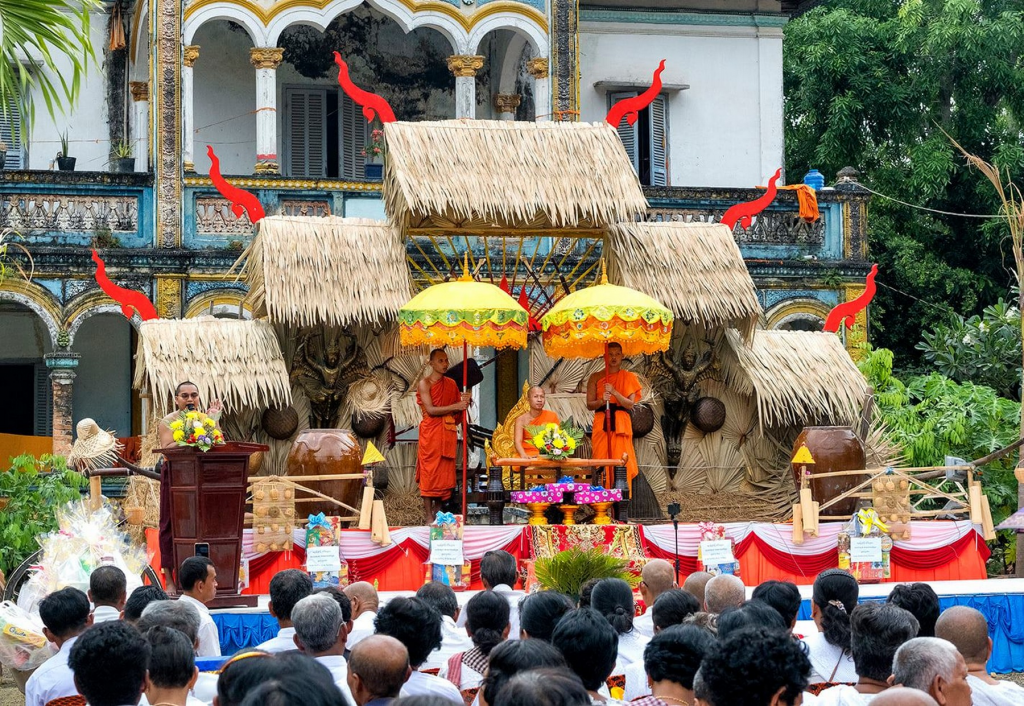
- Pagodas as the centre of village life: across the Mekong Delta, Khmer pagodas function as far more than places of worship – they’re schools, festival grounds, and the anchor of community identity, some standing for well over a century.
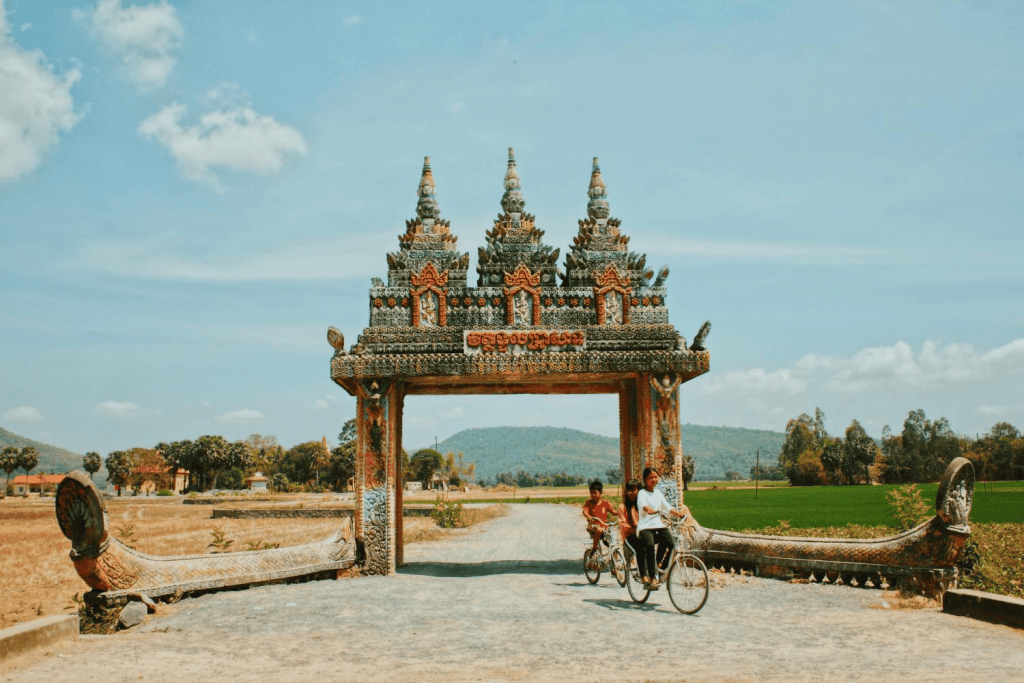
- Festivals worth timing a visit around: the Khmer New Year (Chol Chnam Thmay) and the Ok Om Bok festival bring music, food, and ceremony to villages around Tri Tôn, offering a rare window into a living tradition rather than a staged performance.
3.2 Everyday Life Along Quiet Roads
Away from the pagodas, Tri Tôn’s Khmer culture shows up in smaller, quieter details – the kind that reward travelling slowly rather than ticking off sights.
- Markets that still run on local time: small roadside and village markets around Tri Tôn sell produce, palm products, and Khmer specialities rarely found in Vietnamese-majority towns further east.
- A distinct culinary thread: Khmer cooking around Tri Tôn leans on fermented fish, herbs, and – as in Cambodia – palm sugar, giving the local table a flavour profile that feels closer to Phnom Penh than Ho Chi Minh City.
- A borderland identity, not a museum piece: the Khmer Krom trace their presence in the Delta back centuries, and that history is still visible in language, dress, and custom in villages around the Seven Mountains.
- Family-run stops worth seeking out: small guesthouses and roadside kitchens run by Khmer families are some of the most direct ways to put tourism spending straight into the local community.
Tri Tôn’s culture isn’t a side note to the scenery – it’s one of the most distinct threads left in the entire Mekong Delta.
4. The Thốt Nốt Palm: A Landscape You Can Taste
No single plant defines Tri Tôn’s skyline quite like the thốt nốt – the tall sugar palm that rises above every rice field, every roadside, every pagoda courtyard in the area.
4.1 A Tree Woven Into Daily Life
Before it’s a drink or a sweet, the thốt nốt palm is simply part of the landscape – and part of how the region has supported itself for generations.
- A tree suited to this exact borderland: the palmyra palm (Borassus flabellifer) can grow over 30 metres tall and thrives across An Giang’s three key districts of Bảy Núi, Tri Tôn, and Tịnh Biên, alongside neighbouring Cambodia and Thailand.
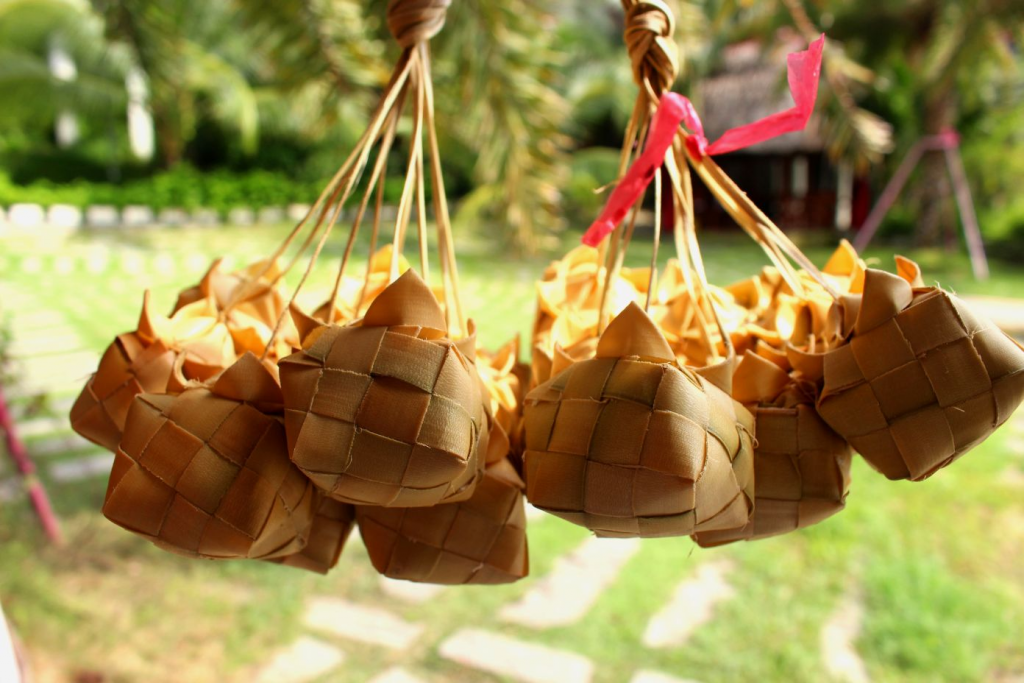
- Every part of the tree is put to use: Khmer households use the fruit, sap, leaves, and trunk of the sugar palm – for drinks, sugar and traditional cakes, for roofing and baskets, and for construction timber.
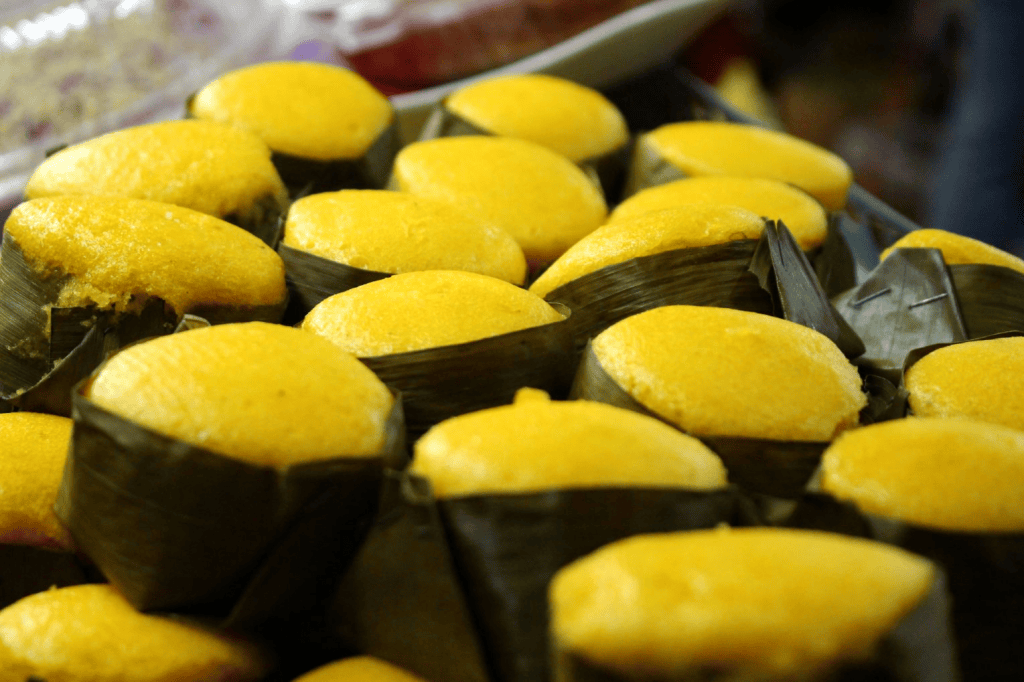
- A tree considered a gift, not just a resource: in local tradition, the palm is treated with something close to reverence, seen by many families as a source of livelihood passed down rather than simply harvested.
- A visual marker of “you’ve arrived”: the moment thốt nốt palms start outnumbering coconut trees along the road, most guides agree, is the moment you know you’ve reached Tri Tôn.
4.2 From Sap to Sugar, One Tube at a Time
Watching palm sugar made by hand is one of the most memorable, low-key experiences in the entire region – and one most visitors to Vietnam never see.
- Harvested from flower, not fruit: producers climb the trees to collect nectar from the palm’s flower stalks using a tube or bamboo container, a skill usually passed down within families rather than taught formally.
- A slow simmer, not an industrial process: the collected sap is cooked over an open flame for three to six hours, stirred continuously until it condenses into the dense, caramel-brown palm sugar sold at local markets.
- A drink worth trying fresh: chilled palm juice, cut with a little ice, is the most common way to try thốt nốt on the spot – sweeter and more floral than coconut water, and impossible to bottle authentically.
- A stable income for Khmer households: palm sugar production provides steady monthly income for many families around Tri Tôn, now sold as far as national supermarkets while remaining a genuinely village-level craft.
Few souvenirs travel further than a block of palm sugar – proof that Tri Tôn’s landscape and its livelihoods are the same story.
5. The Mango Tiger Way in Vietnam
Everything above is exactly the kind of destination we look for when we say we’re building “unique” products, not just new stops on an old route.
5.1 People with Purpose
Under Vietnam Country Manager Thuc Phan, our Vietnam programme is built by people who know these roads personally, not by a spreadsheet of attractions. In the Mekong Delta, Mrs. Danh has run a family homestay for fifteen years, hosting up to seventy guests and leading her own cooking classes – the same spirit of hospitality that makes a Tri Tôn detour feel like a welcome rather than a transaction. It’s this kind of local relationship, built over years rather than booked overnight, that lets us open up places like Tri Tôn responsibly. Meet the team behind Mango Tiger.
5.2 Places with Purpose
Tri Tôn earns its place in our Vietnam programme precisely because it resists the “seen it already” reaction. Mountains rising out of rice fields, a Khmer culture with its own language and architecture, and a landscape still largely untouched by mass tourism – this is what Places with Purpose looks like when a Destination Management Company genuinely goes looking for something new, rather than repackaging the same six stops every operator already runs.
5.3 Products with Purpose
Adding a destination like Tri Tôn to our Vietnam offering is a deliberate act of product innovation, not a marketing flourish – the kind of work behind every tailor-made journey we design, and equally suited to small group itineraries or independent travelers who want the Mekong Delta without the crowd. It sits comfortably alongside our wider Impact Experiences, built on the same principle: real income for the families and communities who make a place worth visiting in the first place, supported by commitments like our TonToTon plastic-to-building-material partnership and our ongoing impact goals across the region.
About Mango Tiger
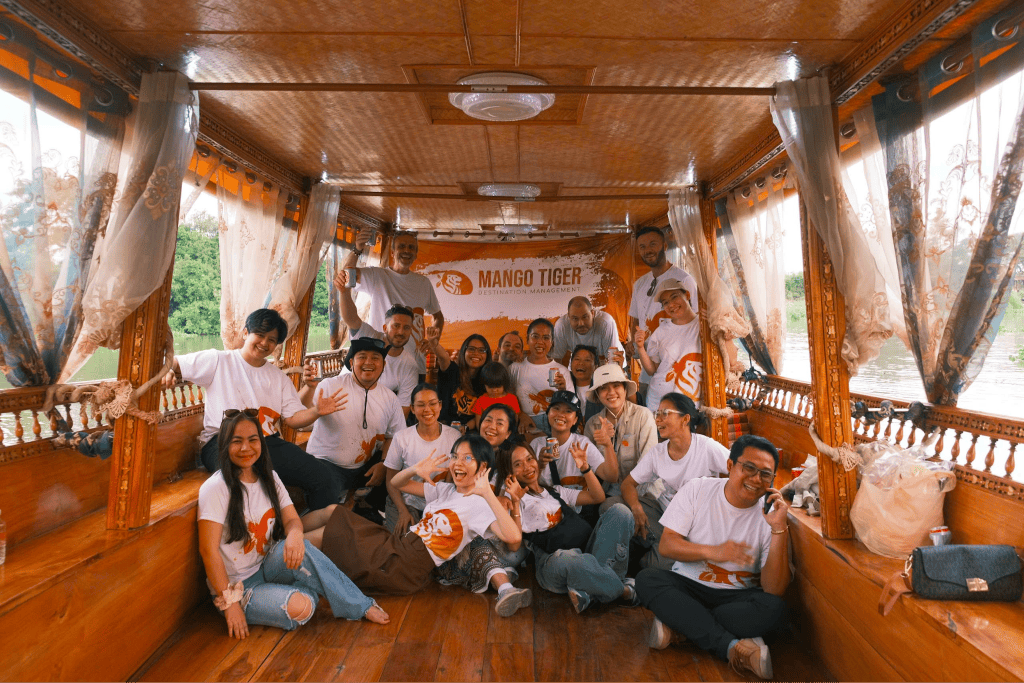
Mango Tiger is an Asia-based destination management company built to modernise inbound travel across the region, operating across Vietnam, Cambodia, Laos, Thailand, Indonesia (Bali), and the Philippines. The company designs its trips around three values – Fresh, Authentic, Passionate – and structures every itinerary through People, Places, and Products with Purpose.
For travellers who feel like they’ve “done” Vietnam already, Mango Tiger’s job is finding the places that prove them wrong – vetted, tested, and built into a route that actually works. Explore the full story on our About page or our Impact page.
Tri Tôn is proof that even a well-travelled region like the Mekong Delta still has genuinely new chapters left to tell. Ready to add mountains, palm sugar, and Khmer culture to your Vietnam itinerary? Get in touch to start planning, or head straight to book now to lock in your dates.
