

Picture a classroom with no walls: round hills like giant scoops of earth, a forest where the world’s smallest primates blink back at eye level, and a reef alive enough to watch a turtle breathe. That classroom is Bohol Island, and since UNESCO named it the Philippines’ first Global Geopark in 2023, this Visayan island has quietly become one of Southeast Asia’s most compelling places for a school group. Here, geology, biodiversity, and community resilience stop being chapter headings and become things students stood inside.
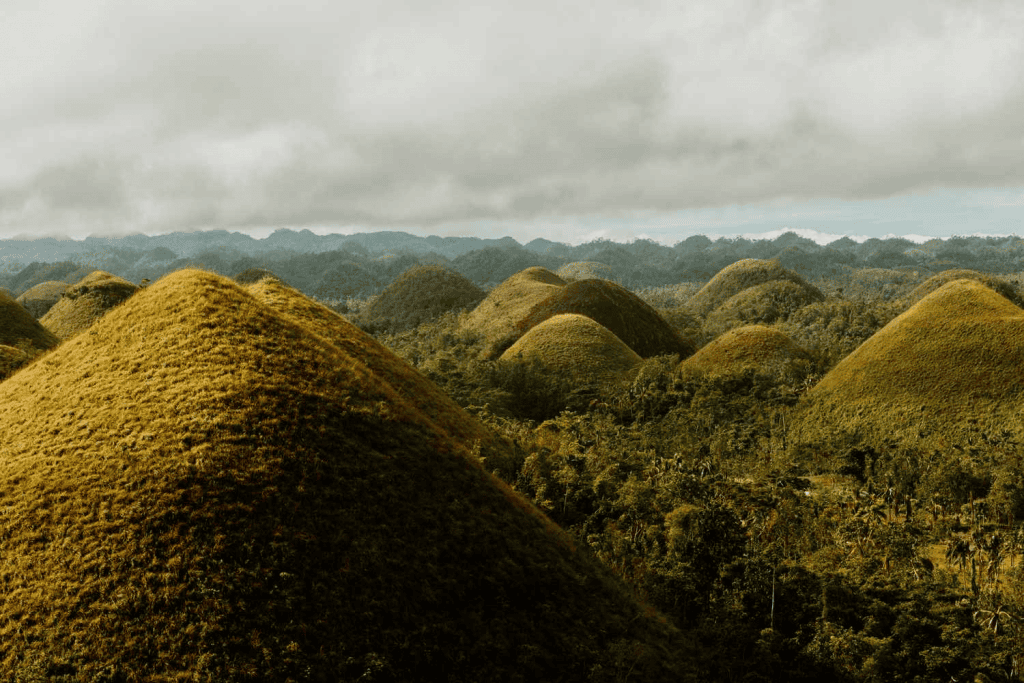
1. The Chocolate Hills: A Living Earth-Science Lesson
Most students have scrolled past a photo of these strange hills without learning what made them. Standing among them changes that fast – a fairy-tale landscape that is, geologically, a textbook come to life.
1.1 What the Hills Actually Teach
A field site earns its place when students can measure something, not just admire it. The Chocolate Hills deliver on both counts.
- Karst geology in the field: Between 1,260 and 1,776 cone-shaped limestone mounds spread across more than 50 square kilometers, formed as rainfall and groundwater dissolved ancient marine limestone after tectonic uplift – a real-world case study in karst landscape formation, per Rappler’s reporting on the hills.
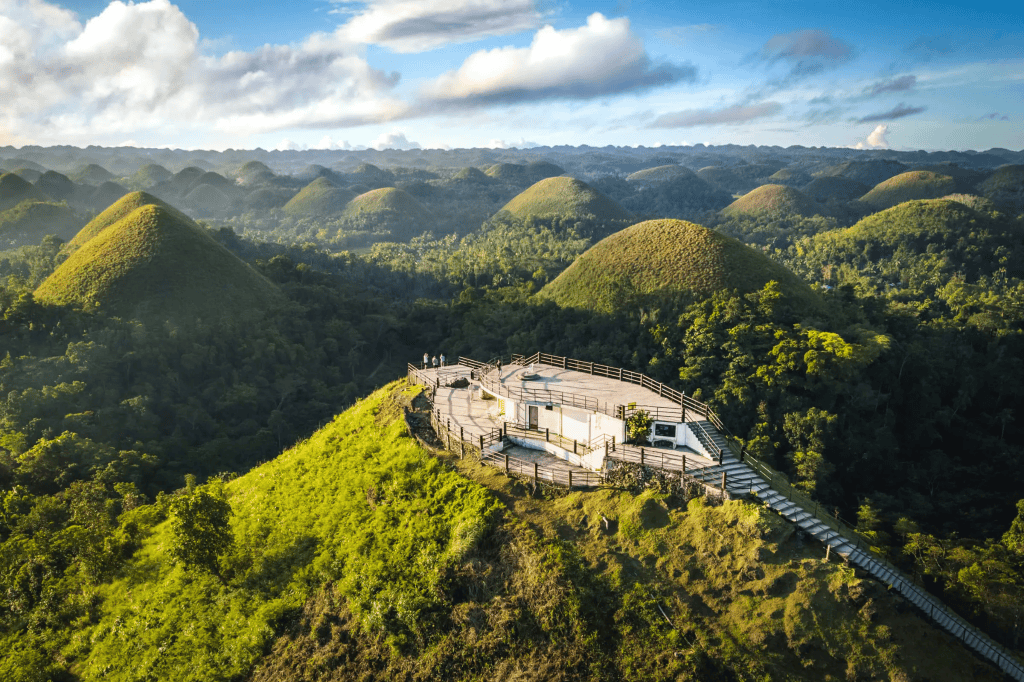
- Scale students can measure: Domes typically rise 30 to 50 meters, with the tallest reaching roughly 120 meters – real data to record and compare against textbook diagrams.
- A protected monument, not just a viewpoint: Declared a National Geological Monument in 1988 and further protected as a national park under Republic Act 11038 in 2018 – a strong entry point for discussing legislated heritage.
- On the world stage: The site sits on UNESCO’s Tentative List for World Heritage status, opening a discussion of what “outstanding universal value” means.
1.2 The Geopark Context: Bohol as a Living Laboratory
The hills are famous, but they’re only the headline act – zoom out and the whole island is one connected geological story.
- The Philippines’ first UNESCO Global Geopark: On May 24, 2023, UNESCO designated the entire island a Global Geopark – 8,808 square kilometers of land and sea, shaped by 150 million years of tectonic history. The UNESCO Global Geoparks program itself was established in 2004 and now spans nearly 200 sites across 48 countries, so Bohol’s entry puts it in genuinely select company.
- More than the hills alone: The designation covers the Chocolate Hills alongside the Danajon Double Barrier Reef and Hinagdanan Cave, one of only a handful of double-layered barrier reefs on Earth.
- A four-year cycle, not a permanent trophy: Status is revalidated every four years, ranging from renewal to probation to revocation – useful for discussing environmental policy.
- 1.4 million people, one shared landscape: The geopark supports roughly 1.4 million residents dependent on agriculture, fishery, and tourism – the interdependence our guides weave into every stop.
Bohol turns geology from a diagram in a textbook into a landscape students can stand inside.
2. Biodiversity Up Close: Meeting the Philippine Tarsier
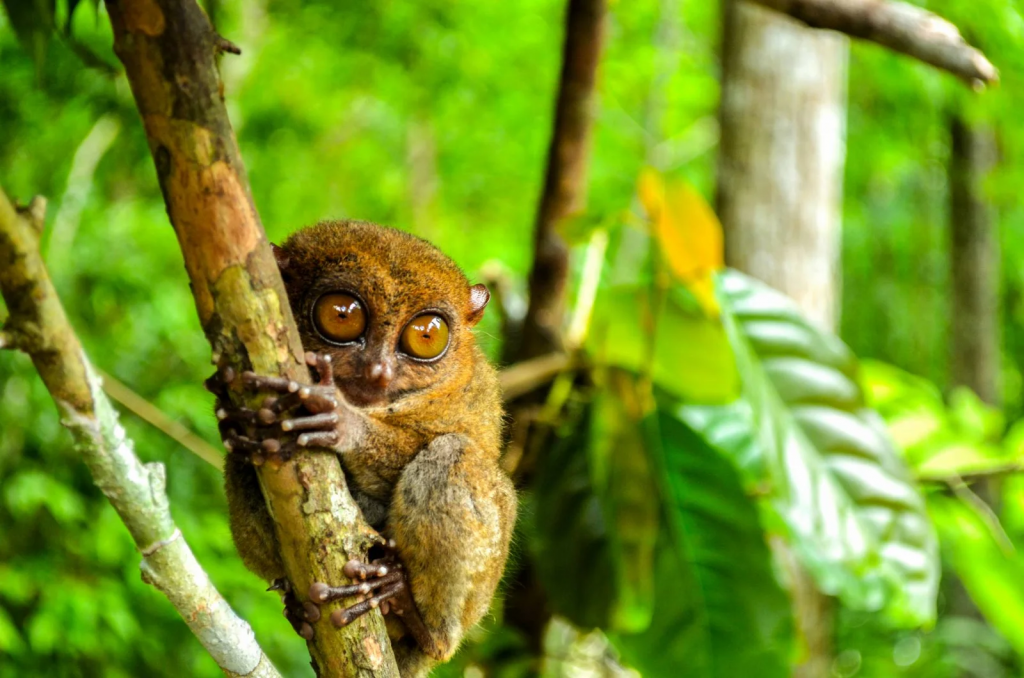
A particular silence falls over a group of teenagers spotting their first tarsier – two enormous eyes blinking from a branch barely above head height. Few encounters land harder, and this one comes with a built-in lesson in habitat conservation.
2.1 Inside the Tarsier Sanctuary
Before anyone gets close, it helps to know what’s protecting this animal – the sanctuary is as much the lesson as the tarsier.
- A dedicated conservation organization: The Philippine Tarsier Foundation was established in 1996 to conserve the species and run a protected sanctuary – not a roadside photo stop.
- An 8.4-hectare protected forest: The sanctuary sits in Barangay Canapnapan, Corella, roughly 14 kilometers from Tagbilaran City, sheltering an estimated thousand wild tarsiers.
- Conservation in action: The foundation runs reforestation, a research center, and active monitoring – rich material for lessons on species protection, matching the tarsier’s IUCN Near Threatened listing. Biologically, tarsiers are a genuine curiosity – nocturnal primates only 9 to 16 centimeters long with a tail twice that length, sitting on an evolutionary branch between lemurs and monkeys.
- Responsible-viewing protocols: Because tarsiers are stress-sensitive nocturnal animals, guides enforce strict no-flash, low-noise rules – a springboard for discussing tourism’s impact on wildlife.
2.2 Rainforest Ecosystems Along the Way
The sanctuary is rarely a stand-alone stop – the road there and back offers smaller lessons that build on each other.
- The Bilar Man-Made Forest: A dense corridor of mahogany trees planted decades ago now forms a cool, cathedral-like canopy – useful for comparing planted versus native forest.
- The Sipatan Hanging Bridge: Crossing this bamboo bridge over the canopy gives students a physical vantage point for observing forest stratification firsthand.
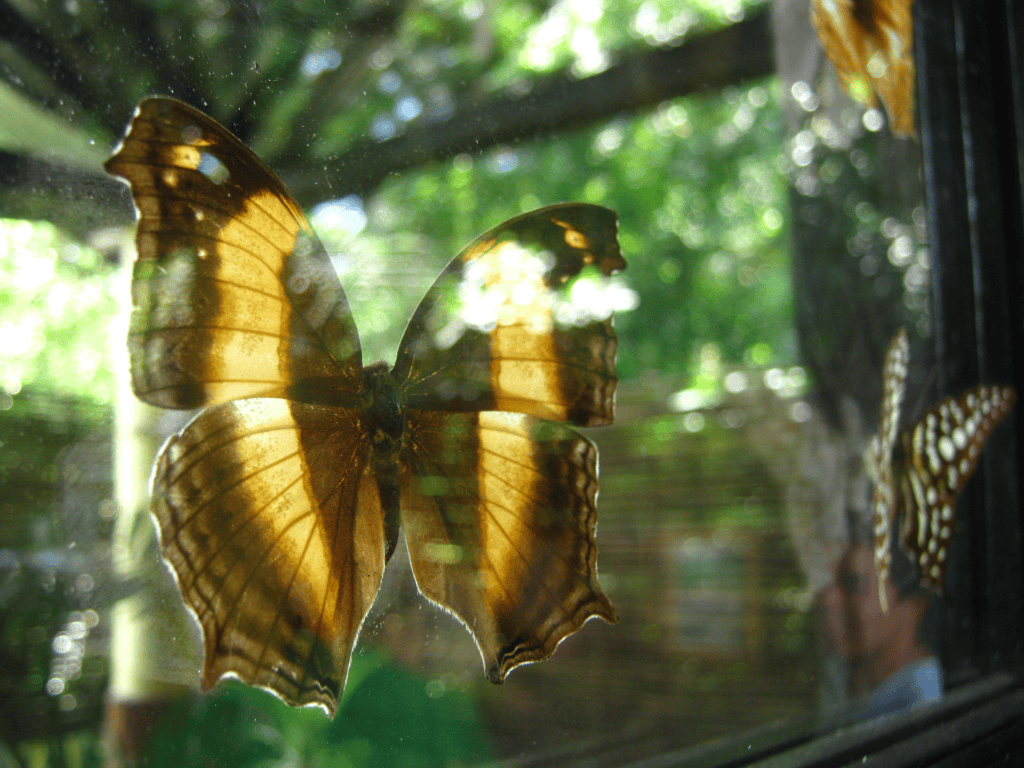
- Butterfly Garden encounters: A stop here lets younger groups observe lifecycle stages and pollinator ecology up close.
- Built into a full-day itinerary: These stops feature in our Bohol Countryside Tour, strung together with Baclayon Old Church, the Blood Compact shrine, Bilar forest, and a Loboc River cruise for up to 50 pax.
A single day on Bohol’s countryside route can carry a class from karst geology to primate conservation without leaving the field.
3. Marine Conservation Off Panglao and Balicasag
Bohol’s classroom doesn’t end at the coastline. Slip beneath the surface off Panglao and the lesson continues underwater, turtles and all.
3.1 Balicasag Island as a Marine Classroom
Not every patch of reef deserves the word “classroom.” Balicasag earns it, thanks to what’s protected here.
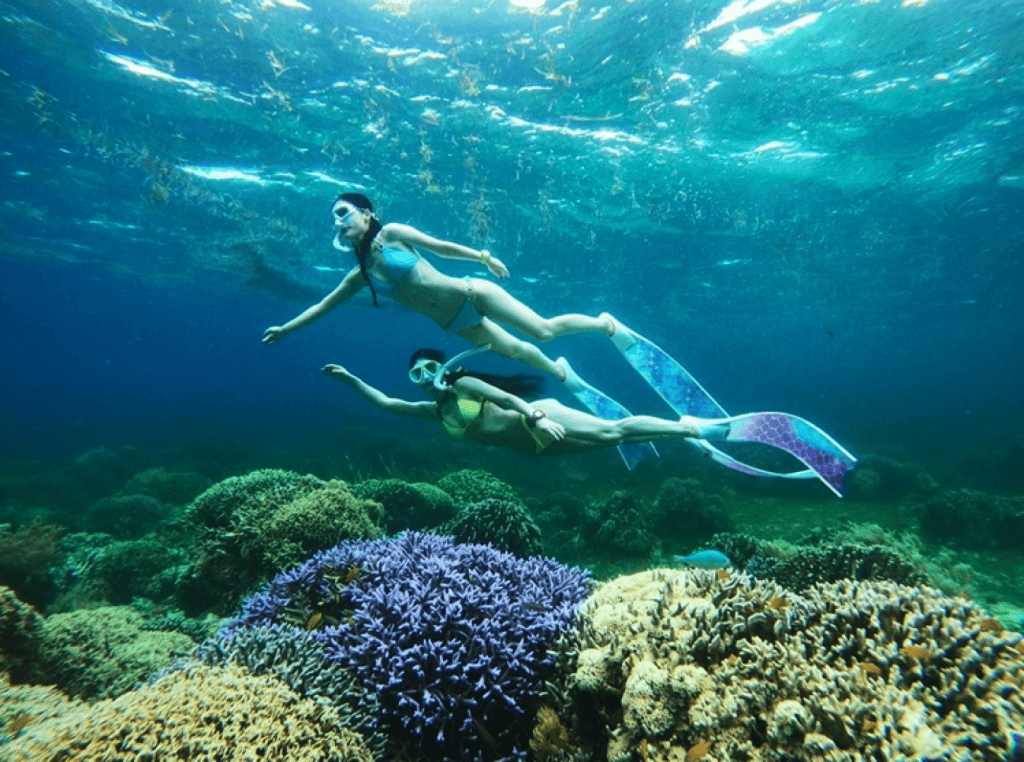
- A recognized marine sanctuary: Balicasag Island is protected as a marine reserve, its fringing reef supporting healthy hard-coral cover, resident turtles, and reef fish – a genuine study site, not a generic snorkeling stop.
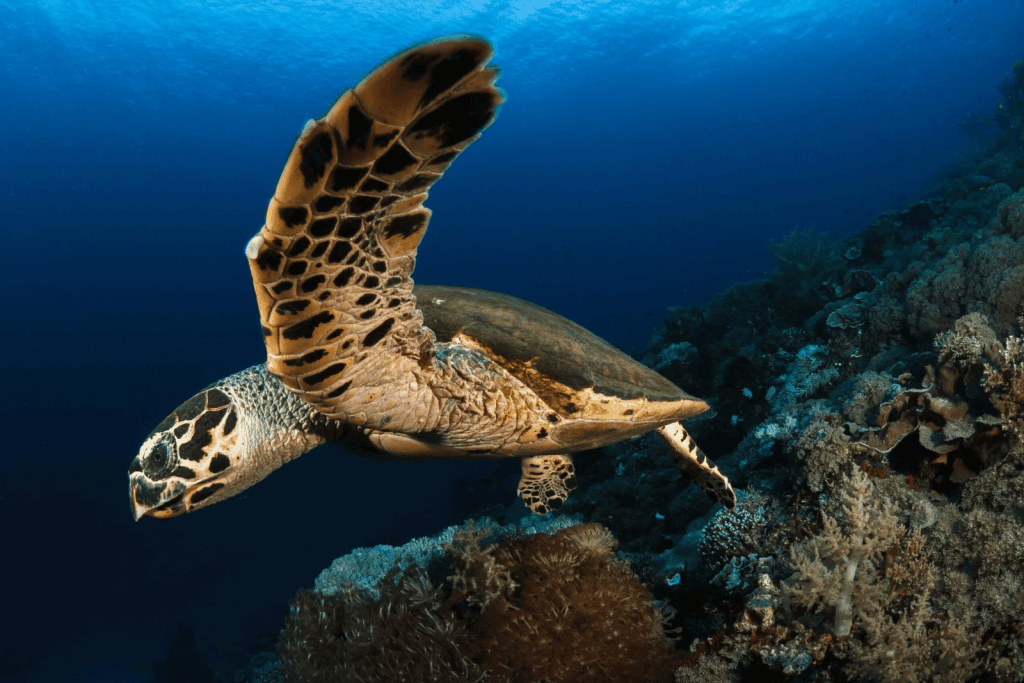
- Species students actually encounter: Green and hawksbill turtles, both IUCN Red List species, are commonly sighted resting or feeding alongside schooling jacks – practical material for lessons on food webs.
- Community-based reef protection: Balicasag’s model reflects the wider approach across the Bohol Sea’s community-managed marine protected areas, where local fisherfolk act as reef wardens.
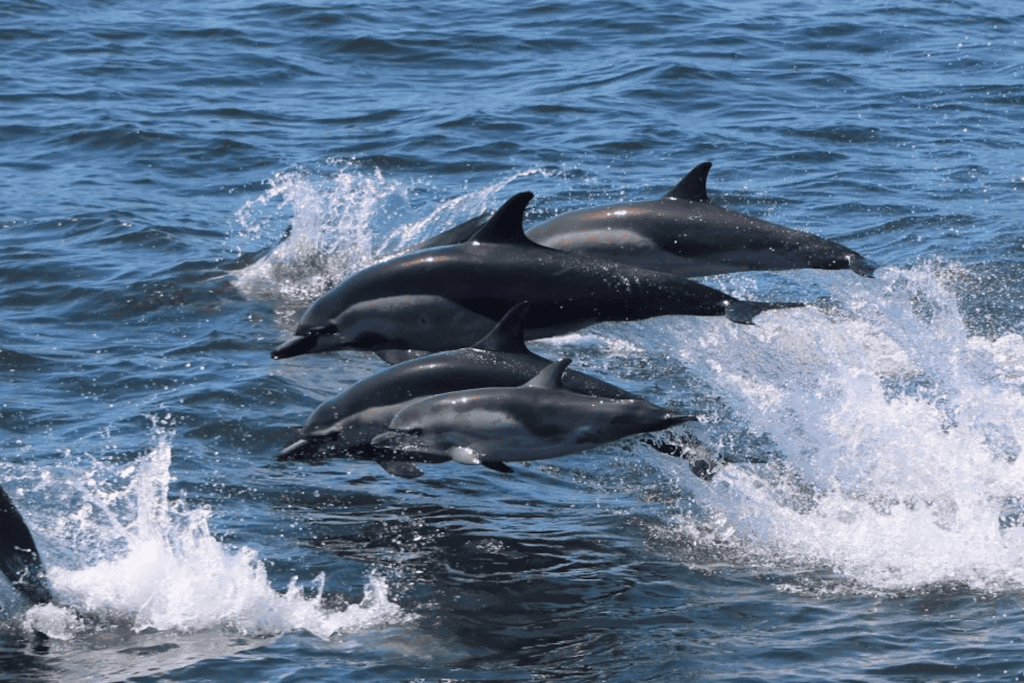
- Dolphins in open water: The channel between Panglao and Balicasag is a reliable spot for spinner dolphin sightings, a bonus lesson in cetacean behavior.
3.2 Bringing It Into the Itinerary
Turning a coastline into a curriculum takes structure. Here’s how a day on the water comes together.
- Panglao Island Hopping & Dolphin Watching: This boat-based program combines reef snorkeling at Balicasag, the Virgin Island sandbar, and dolphin and turtle spotting into one group-scaled encounter.
- A natural base for extended stays: Groups typically base out of Best Western Ivy Wall, an 80-room property on Alona Beach built to environmental and beach-conservation compliance standards.
- Framing snorkeling as fieldwork: Our guides brief every group on reef-safe conduct – no standing on coral, reef-safe sunscreen only – part of the sustainability commitments built into every itinerary.
Off Panglao, the ocean itself becomes the lesson plan – and the conservation stakes are visible in real time.
4. Heritage and Cultural Exchange: Learning From Bohol’s Communities
Landmarks teach history; people teach empathy. Bohol’s most lasting lessons often come not from a monument but from the people who live alongside it.
4.1 Heritage Sites Worth Studying
Before students meet Bohol’s living communities, its stone churches lay the historical groundwork – centuries of contact compressed into one afternoon.
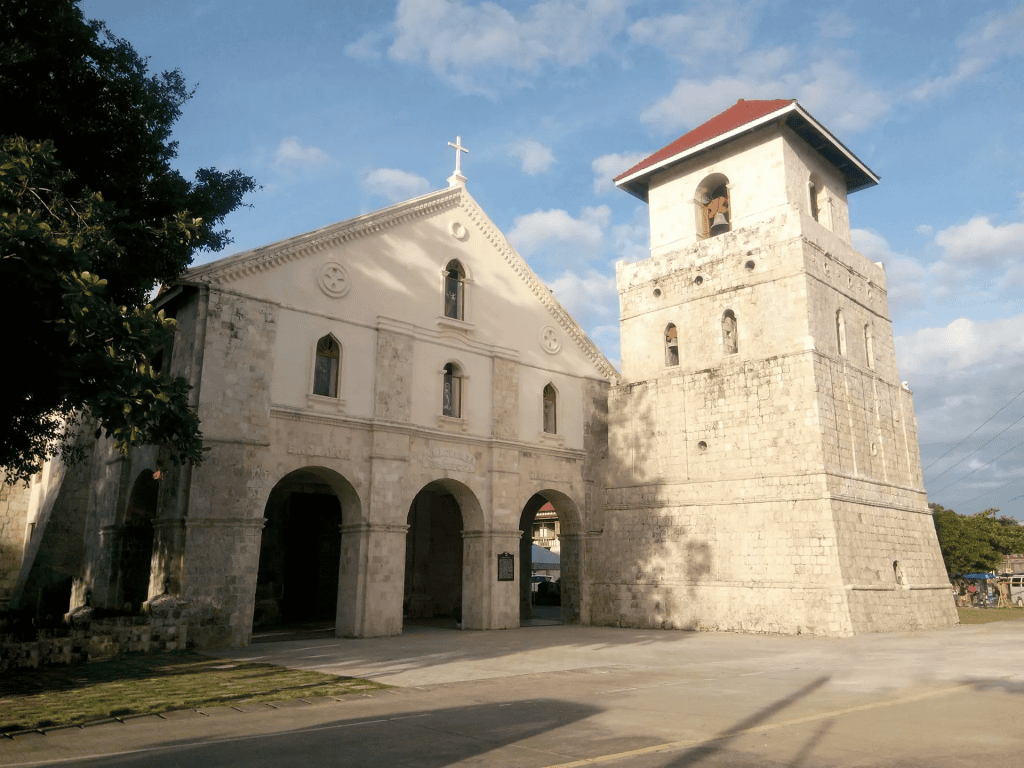
- Baclayon Church: One of the oldest stone churches in the Philippines, it anchors discussions of Spanish colonial history and Bohol’s centuries-old Catholic heritage, and it’s a standing stop on our Countryside Tour. Its history stretches back to 1596, when the first Jesuit missionaries arrived, through a 2013 earthquake and a five-year restoration that reopened the coral-stone structure to the public in 2018.
- The Blood Compact shrine: Commemorating the 1565 pact between Spanish explorer Miguel López de Legazpi and local chieftain Datu Sikatuna, this site gives history classes a concrete anchor for early Philippine-European contact.
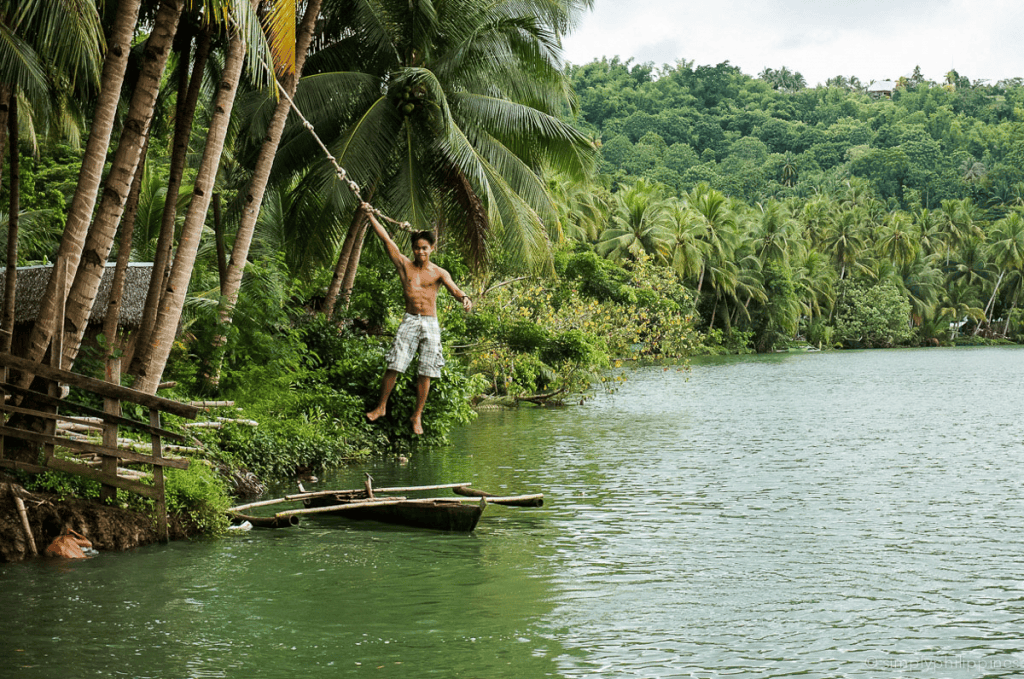
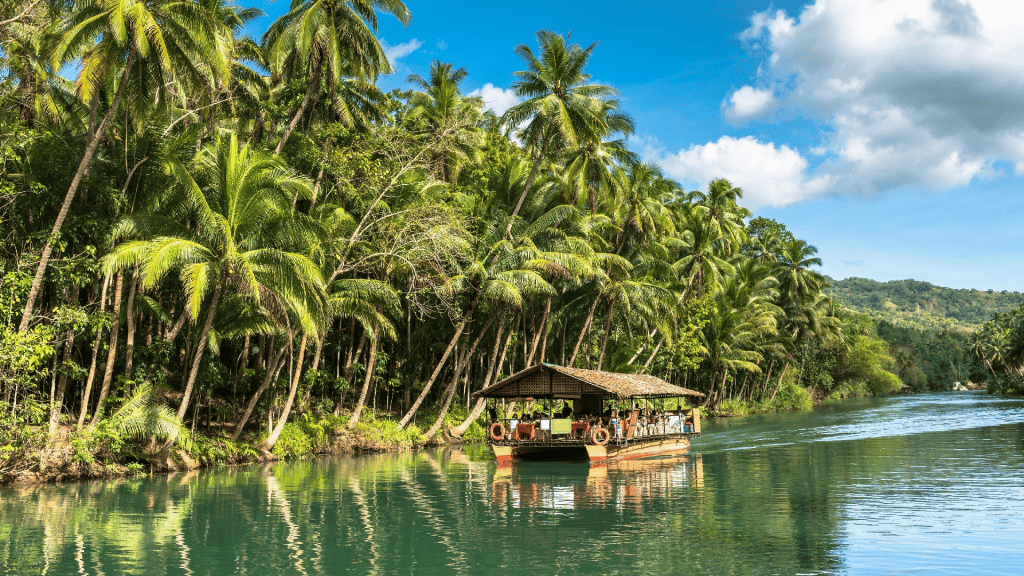
- The Loboc River, culturally and ecologically: A pontoon-boat lunch cruise along the Loboc River pairs riverside ecology with live traditional Filipino music.
4.2 Genuine Community Exchange
This is the part of a Bohol itinerary students remember longest, and it’s the hardest to fake – it works because of relationships built over years, not a script handed to a driver.
- Community Give Back days: Our Impact Experiences include barangay visits where groups play traditional childhood games with local children and share a community-cooked lunch – unscripted exchange available at multiple Bohol locations.
- Meeting Nanay Elena: A Bohol home cook and mother of 12 with 11 grandchildren, Nanay Elena hosts groups for home-cooked lunches filled with family stories – the kind of small, family-run encounter we seek out over any generic restaurant.
- Learning from Ate Inday: On Darocotan Island, longtime resident Ate Inday has lived off-grid for over 35 years, growing food and fishing sustainably – an unfiltered lesson in low-impact living.
- Built on real local relationships: These encounters work because of long-standing ties our local Philippines team has built over years of return visits.
In Bohol, the most durable lessons in global citizenship come from an afternoon spent at someone’s kitchen table.
5. Designing the Program: What Educators Should Plan For
Bohol has no shortage of remarkable sites; the harder part is stitching them into a curriculum, where logistics matter as much as the itinerary.
5.1 What Group Organizers Need to Confirm
A few practical questions decide whether a trip runs smoothly or turns into a headache. Here’s what we ask organizers to confirm early.
- Group size and pacing: The Countryside Tour is designed for up to 50 pax, but larger cohorts should plan split-group scheduling around the tarsier viewing areas, where small-group protocols protect the wildlife. Bohol programs are typically arranged through our group tours offering, which is built around exactly this kind of coordinated, multi-stop scheduling.
- A base built for groups: Best Western Ivy Wall in Panglao offers Superior, Deluxe, Premier, and Family room categories across 80 rooms – flexible for chaperones and families traveling together.
- Safety and legal groundwork: Every education program we run in the Philippines includes a local fixer, established government connections, and built-in risk assessments.
- Real-time support in the field: Groups get 24/7 in-trip support and an optional white-labeled virtual tour guide via WhatsApp.
5.2 Aligning the Trip With Learning Outcomes
A well-run trip and an educationally sound one aren’t the same thing – the difference shows up in the planning conversations that happen weeks before departure.
- Full travel summaries, not just vouchers: We provide detailed travel summaries ahead of time, giving teachers what they need to map activities against learning objectives before departure.
- Community-first itinerary design: Every program is built to genuinely benefit the communities visited, not simply pass through them.
- Carbon-conscious logistics: Carbon-neutral tour options and a plastic-reduction partnership with TonToTon let educators fold sustainable-travel discussion into coursework – part of the broader impact commitments that shape every Mango Tiger itinerary, in the Philippines and beyond.
- A model built for education specifically: Because programs are customized to each school’s requirements rather than adapted from a generic tour, the itinerary can flex around science, language, or global-citizenship curricula – the same flexibility we bring to our tailor-made journeys across the region.
The best education trips in Bohol aren’t assembled from a menu – they’re designed around what a class needs to learn.
6. The Mango Tiger Way in the Philippines
Behind every stop sits a set of choices about how we work – three commitments running through everything above.
6.1 People with Purpose
Bohol’s program runs through real relationships. Our local Philippines team has spent years building the on-the-ground connections that make community visits genuine rather than staged – from Nanay Elena’s home-cooked lunches to Ate Inday’s off-grid life on Darocotan Island. Every trip is backed by a local fixer, translator, and government relationships that keep student travel safe and legal.
6.2 Places with Purpose
From the karst domes of the Chocolate Hills to the reef around Balicasag Island, Bohol’s landscapes are treated as living classrooms, not backdrops for a group photo. We design itineraries – the Countryside Tour, Panglao Island Hopping & Dolphin Watching, and Community Give Back days – that connect geology, biodiversity, and culture into one purposeful narrative.
6.3 Products with Purpose
Every Bohol program is built on our wider commitments: carbon-neutral tour solutions, the TonToTon plastic-reduction partnership, a preference for family-run local suppliers, and risk assessments embedded in every itinerary – because a great learning trip has to be a safe one first.
About Mango Tiger
Mango Tiger is an Asia-based Destination Management Company built on three values – Fresh, Authentic, and Passionate – operating across Vietnam, Cambodia, Laos, Thailand, Indonesia (Bali), and the Philippines, designing experiences rooted in real local relationships.
In education travel specifically, we craft custom itineraries and community-driven programs for students of all ages – local fixers, government-vetted logistics, and 24/7 in-trip support included – so teachers can focus on learning outcomes. Learn more about our approach or explore our Philippines destinations and experiences.
Bohol offers one of the richest single-island learning environments in Southeast Asia – earth science, marine biology, heritage, and culture within a two-hour drive of each other. Ready to build a Bohol program your students will still be talking about years later? Contact our team to start planning, or book your group’s dates now before the best Panglao properties fill.
