

Near the Cambodian border, the Mekong fans out into a maze of islets and sandbars – Si Phan Don, literally “4,000 Islands” – where the loudest sound most mornings is a rooster, a paddle dipping into water, or a bicycle chain. There’s nowhere to rush here. Fishermen mend nets the way their grandfathers did, dugout canoes slip between stilt-house villages, and somewhere in these channels a handful of the world’s last Irrawaddy dolphins still surface for air. It’s a place that rewards travelers who arrive together and slow down together – one of our favorite corners of Laos to build a trip around.
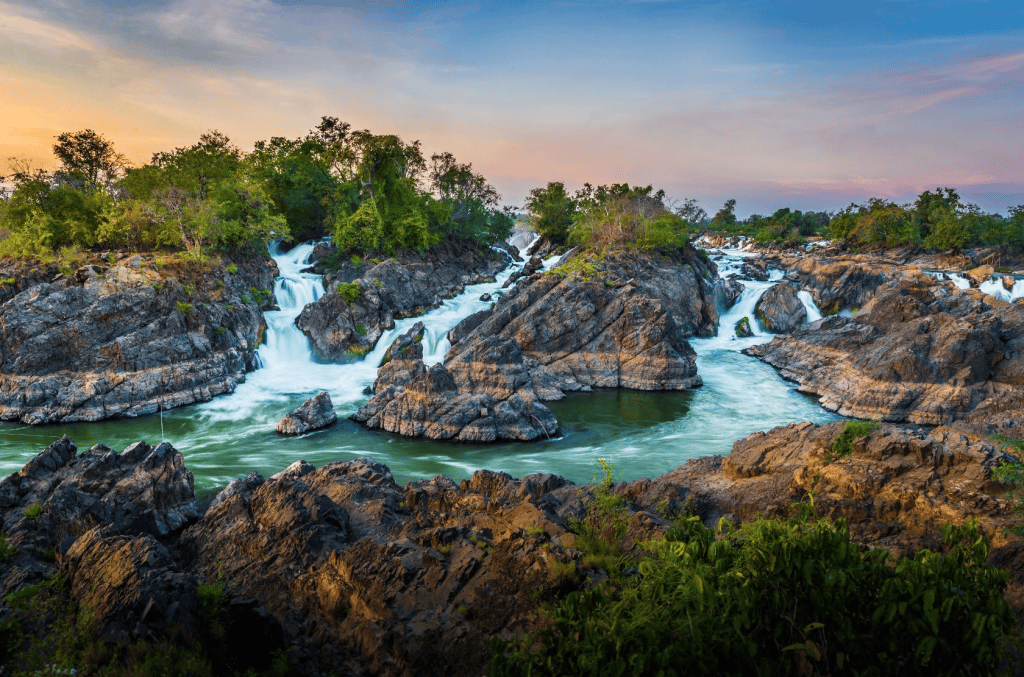
1. What Makes Si Phan Don a Natural Fit for Groups
1.1 A Landscape Built for Shared, Unhurried Movement
Half the challenge of any group trip is keeping everyone together. Si Phan Don solves that before it starts – no traffic, no climbs, nowhere to get left behind.
- Flat, walkable terrain: The islands of Don Det, Don Khon, and Don Khong are largely flat and car-free, so any fitness level can cycle or walk together.
- Compact geography, expansive feel: Despite the “4,000 islands” name, the inhabited core is small enough to explore together in two or three days, per Wikipedia.
- No traffic, no rush: With almost no motorized vehicles here, groups move at a shared human pace – ideal for group tours built around conversation, not convoy logistics.
- A hub for the southern Laos loop: Si Phan Don sits in Champasak province, at the natural endpoint of a Mekong journey from Pakse, an easy final chapter through Laos.
1.2 Guides Who Actually Live This River
Anyone can point out a waterfall on a map. What makes a trip memorable is a guide who grew up on the river – that’s who we send.
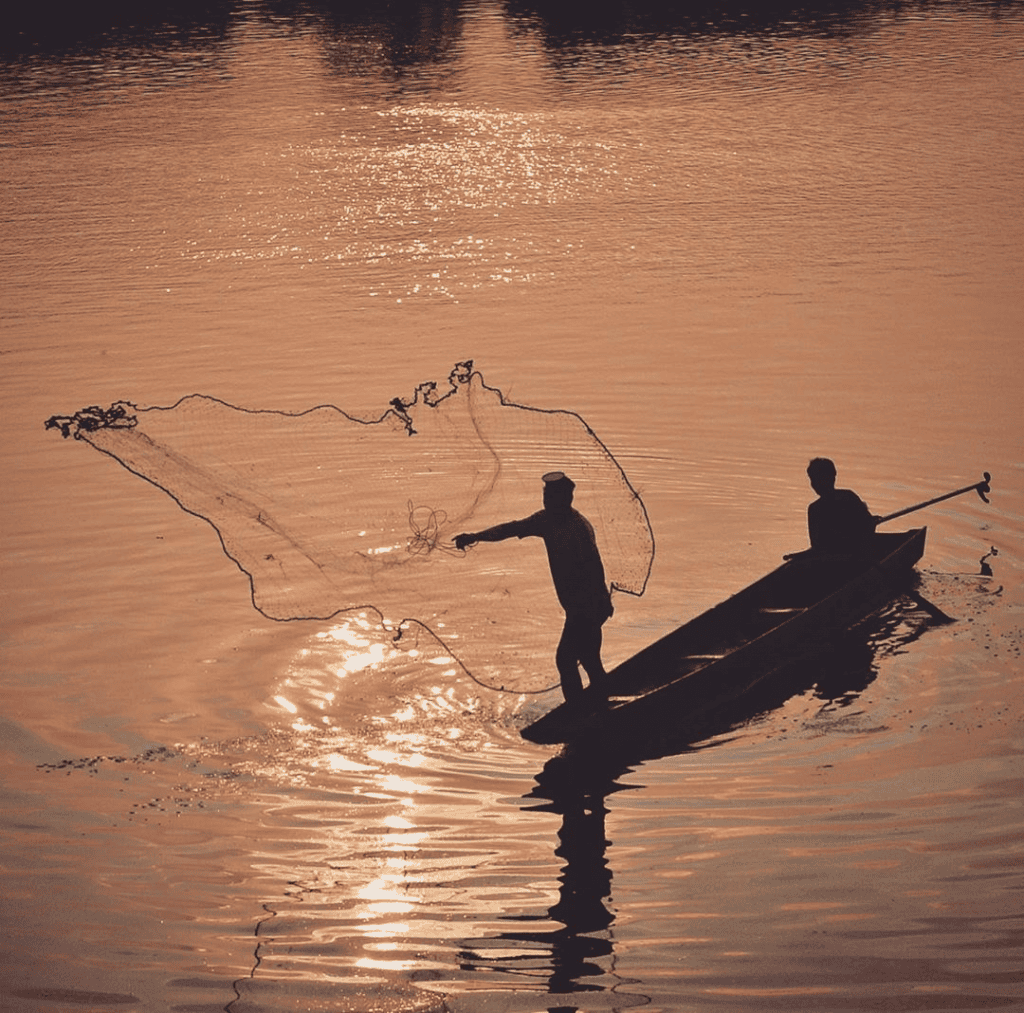
- Local, lifelong knowledge: Our 4,000 Islands Fishing & Cooking experience is led by a guide who has lived his whole life on the Mekong.
- Purpose-built group training: Every guide here has completed our in-house Mango Tiger Guide School, an eight-module course on logistics and duty of care.
- Shadowing before solo leading: New guides shadow experienced leaders on real departures first, so whoever leads your group already knows how it moves through these islands.
- Trained for real group dynamics: Lateness, mismatched paces, and shifting dynamics are addressed directly in training, with daily check-ins built in.
Si Phan Don rewards a group that moves together – we build both the itinerary and the guide to make that happen.
2. Cycling the Riverside Villages
2.1 Pedaling Between Don Det and Don Khon
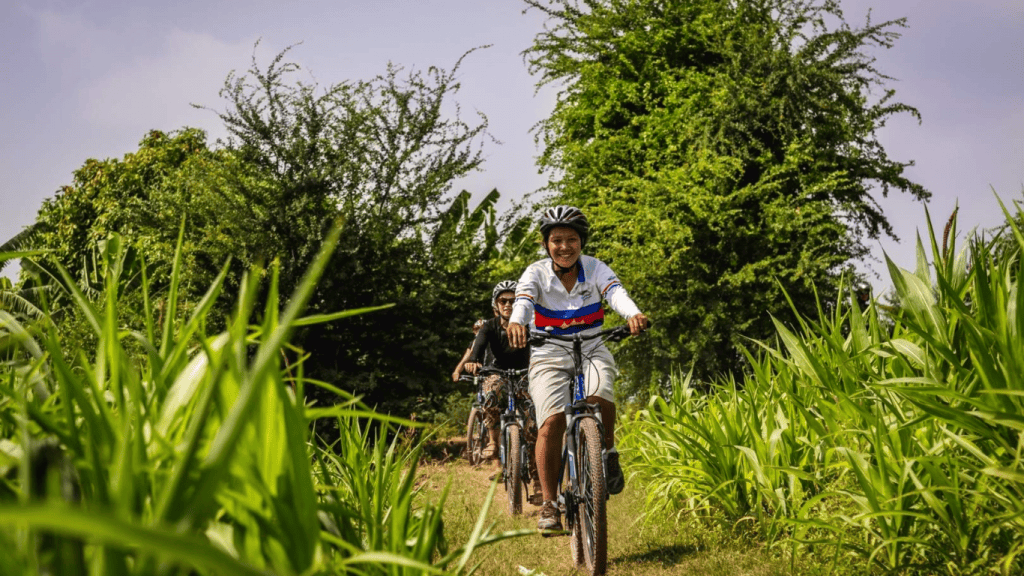
Rent a rusty single-speed bike and point it down a palm-shaded dirt path – the best way to see these islands. The route between Don Det and Don Khon is a rolling piece of history.
- A ready-made cycling network: The old French Don Det–Don Khon railway trackbed, built in 1893 to haul steamships around the falls, is now a compacted cycling path.
- Living history along the way: Riders pass the preserved steam locomotive Eloïse, built in 1911, sheltered at Ban Khon near Khone Phapheng Falls.
- Villages, not viewpoints: Routes thread through stilt-house hamlets where rice farming and daily life continue much as they have for generations.
- A shared rhythm for the group: With flat terrain and short distances, mixed-ability cyclists regroup easily at village stops instead of straggling apart.
2.2 Village Encounters That Build Real Connection
The best moments here rarely happen on the bike itself – they happen when you stop. A woman waving your group over to see her loom, a plate of grilled fish at a roadside stall.
- Riverside hospitality: Homestays and family-run guesthouses on Don Khon and Don Det give groups a genuine welcome, not a staged photo-op.
- Craft and daily-life stops: Weaving looms, drying fish racks, and small riverside markets offer natural pauses for direct interaction with families.
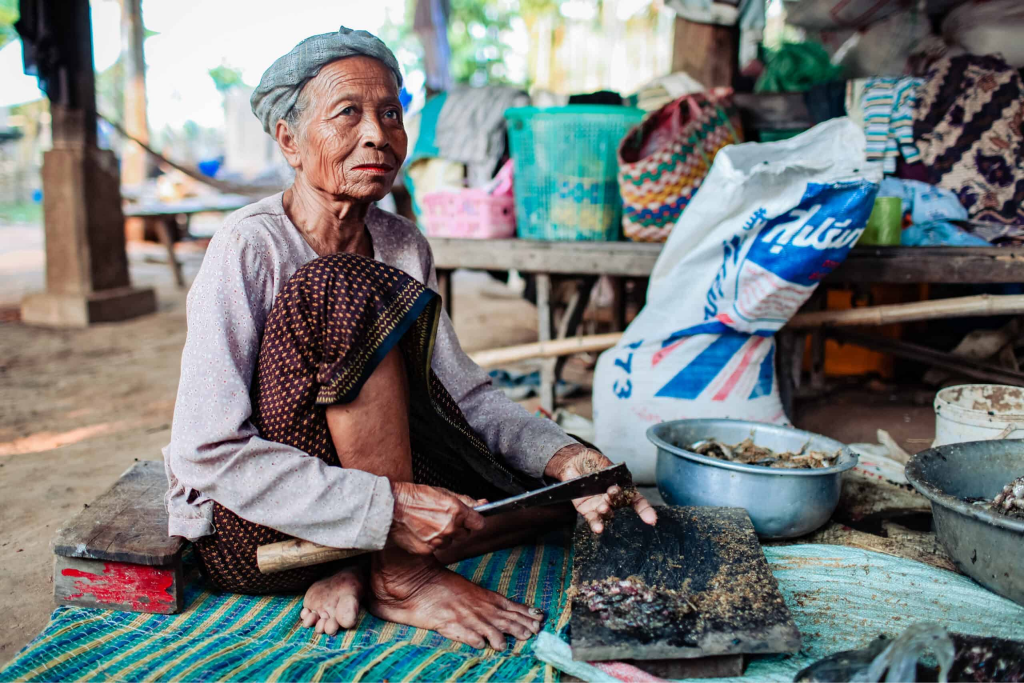
- A model we’ve seen work elsewhere in Laos: The same immersion happens further north at Manichan Garden House, where guests learn the cooking of the Son Phao Thai Daeng community.
- Small footprint, direct benefit: Cycling stops route through family-run stalls and homestays, keeping income local – core to how we design responsible travel in Laos.
A day on two wheels here is less about mileage and more about the villages a group gets to stop in.
3. Kayaking and Boating the Mekong
3.1 Paddling Between the Islands
Trade the saddle for a paddle and the islands look different – lower, quieter, closer to the water. The channels here are gentle enough for a first-timer and a seasoned paddler to share the same stretch.
- Sheltered channels for mixed-ability groups: The braided channels between Don Det and Don Khon offer calmer paddling than the open river.
- The thunder of Khone Phapheng: Boat trips bring groups within sight and sound of Khone Phapheng Falls, often called Southeast Asia’s widest waterfall by volume.
- Fishing the traditional way: Our 4,000 Islands Fishing & Cooking excursion stops at riverside islands to learn fishing from locals, then a Lao barbecue together.
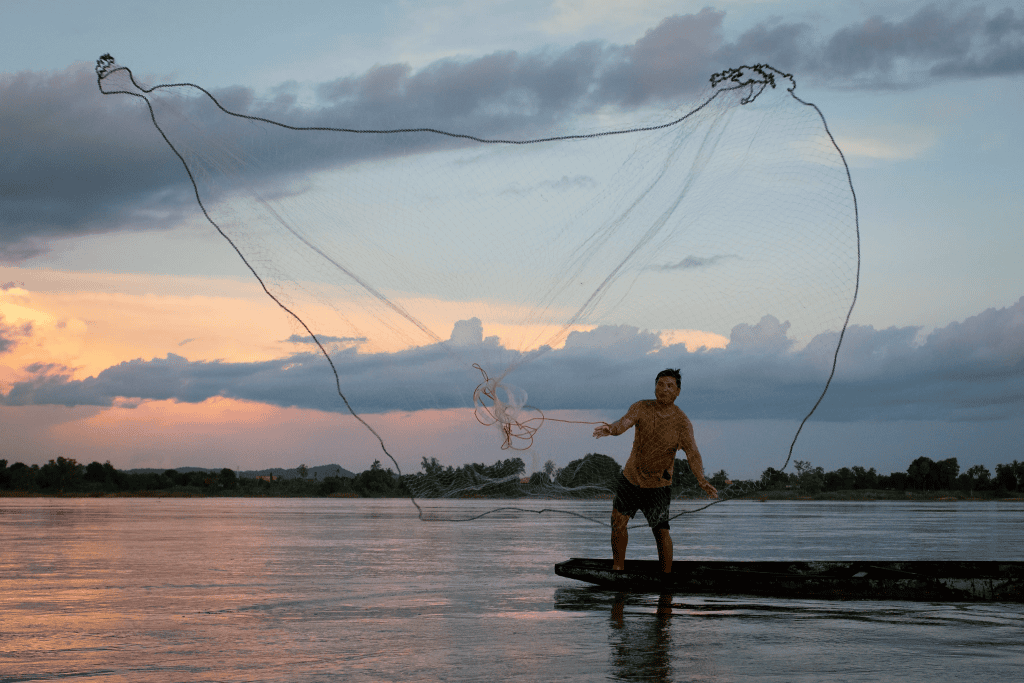
- A finale worth sharing: Ending the day with a shared meal, not a rushed transfer, is the kind of unhurried moment group travelers remember longest.
3.2 Boats as the Region’s True Connective Tissue
Out here, the boat isn’t a shuttle between attractions – it’s often the attraction itself. Ask anyone who’s watched the sun drop behind the palms from a slow-moving longtail.
- Island-hopping by longtail: Traditional wooden longtail boats remain the practical way to move a group between islands, turning transport into part of the experience.
- Sunset river cruises: Slow evening boat rides along the Mekong are a favorite group activity, golden light over the water as fishing boats return home.
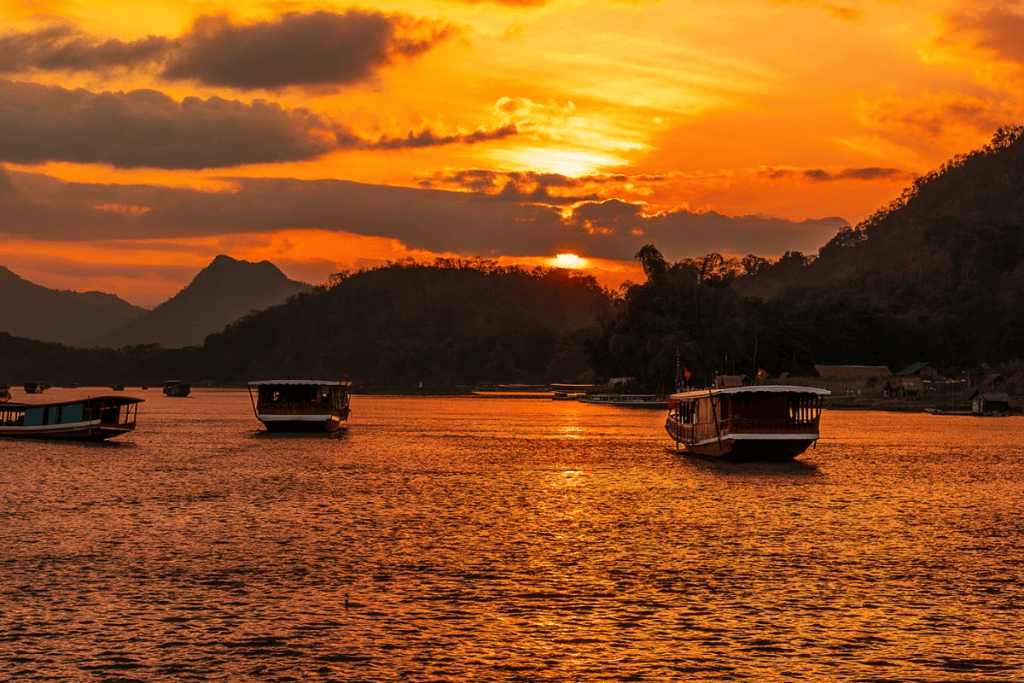
- Border-of-Cambodia geography: Si Phan Don sits at Laos’s southern edge where the Mekong crosses into Cambodia, per Wikipedia.
- Built-in flexibility: Because much of the region is only reachable by boat, one coordinator tracks timing so a schedule adjusts smoothly if river levels shift.
On the Mekong, the boat isn’t just how a group gets somewhere – it’s where a lot of the trip actually happens.
4. Spotting the Rare Irrawaddy Dolphins
4.1 One of the Last Refuges of a Critically Endangered Species
There’s a particular hush that falls over a boat when someone spots the first dolphin fin – and it happens here more than almost anywhere else left on Earth. It’s worth knowing how rare that is.
- A vanishingly small population: An estimated 92 individual Irrawaddy dolphins remain in the Mekong, mostly along the Laos-Cambodia border.
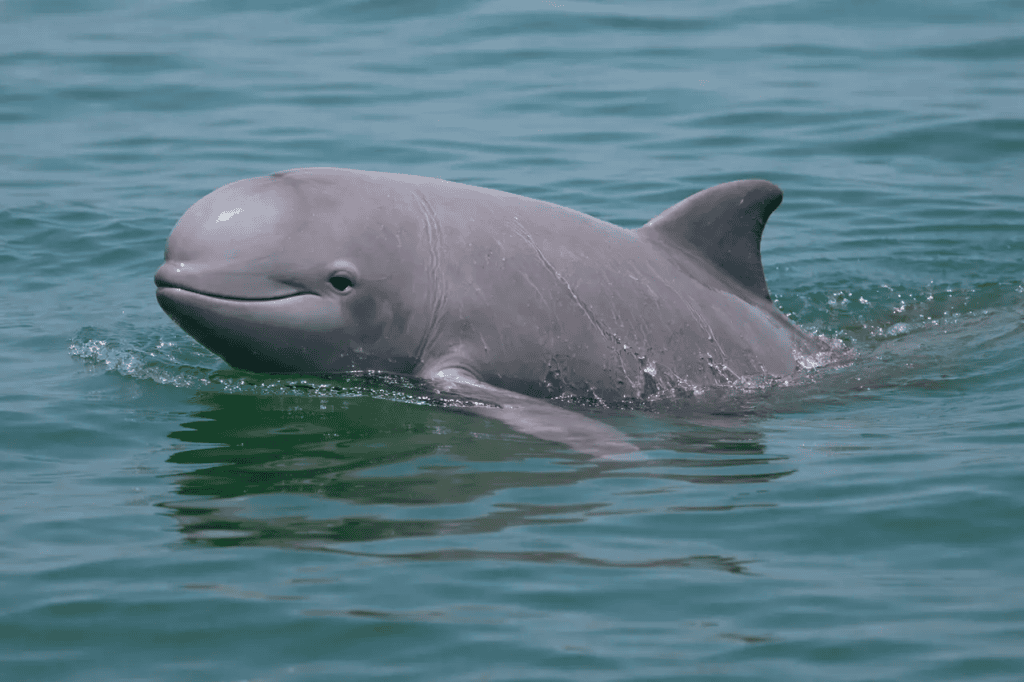
- A species under real pressure: WWF names bycatch in fishing gear as the primary threat, alongside habitat disruption from dams and boat traffic.
- Ecological and cultural weight: The dolphins indicate the health of a river system supporting around 1,100 fish species, and carry deep meaning for Lao and Khmer communities.
- Conservation in action nearby: WWF runs ongoing survey and fisheries-management work along this exact stretch of river.
4.2 Watching Responsibly, as a Group
Seeing a dolphin here isn’t a guarantee, and it shouldn’t be treated like a photo op. The boatmen who take groups out know that best – their families have watched these waters for generations.
- Small-boat, low-impact viewing: Dolphin-watching excursions from Don Khon use small local boats, run by community boatmen who know the pods’ patterns and keep a respectful distance.
- Timing matters: Early morning and late afternoon departures tend to offer calmer water and better sightings, which our itineraries build in rather than leave to chance.
- A shared, quiet moment: Dolphin spotting happens in near-silence on a slow-moving boat – a naturally bonding experience for a group used to a faster pace.
- Supporting the river’s guardians: Boat operators here are often the same families invested in protecting dolphin habitat, the kind of partnership behind our impact experiences in Laos.
Seeing one of only 92 remaining Irrawaddy dolphins is a rare privilege – and how a group gets there matters as much as the sighting itself.
5. Designing the Ideal Group Itinerary in Si Phan Don
5.1 Balancing Adventure with Genuine Downtime
The best Si Phan Don itineraries resist the urge to fill every hour – this is a place for a hammock and a long lunch, not a checklist. Here’s how a few days here tend to come together.
- A deliberately slower cadence: Unlike temple-heavy northern circuits, a Si Phan Don itinerary is built around long lunches, hammock time, and river views.
- Mixing activity types: Alternating a cycling morning with a paddling afternoon and a dolphin-watching sunset keeps a multi-day itinerary varied, never rushed.
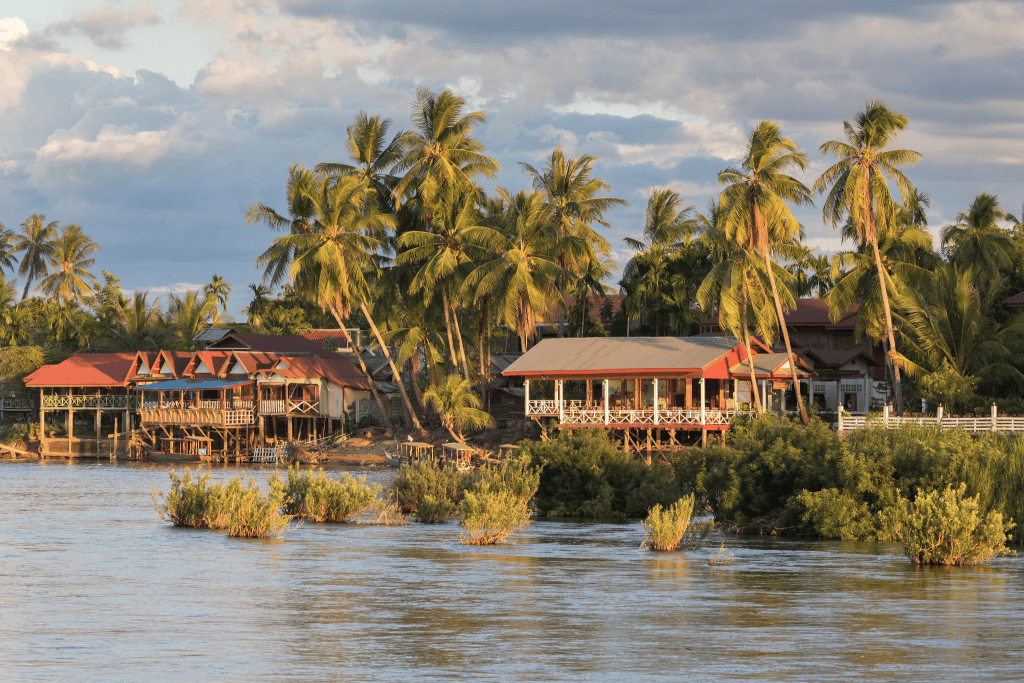
- Riverfront accommodation that fits groups: Guesthouses and small lodges along Don Khon and Don Det host groups together riverside, reinforcing the shared, communal feel.
- A natural link to southern Laos: Deep in landlocked Laos, Si Phan Don pairs naturally with the Bolaven Plateau’s coffee farms and waterfalls, part of our Laos itineraries.
5.2 The Kind of Support You Only Notice When You Need It
A group trip runs smoothly not because nothing goes wrong, but because someone quietly handles it when it does. That’s the unglamorous work behind every departure here.
- One dedicated account manager: Every group series gets a single point of contact for logistics, passenger changes, and day-to-day coordination – no chasing desks.
- Round-the-clock in-trip support: Because river itineraries depend on weather and boat availability, continuous support means travelers are never left waiting.
- Content and marketing help for agents: Partner agents get help selling Si Phan Don-based group programs, using real imagery, not stock photos.
- A genuine feedback loop: Feedback gets gathered after each departure and folded back into the itinerary – reach out via our contact page.
Getting a group to slow down in Si Phan Don takes careful design behind the scenes – which is exactly what our group operations team is built for.
6. The Mango Tiger Way in Laos
6.1 People with Purpose
Our Laos programs run on relationships built over years, not vendor contracts. Mr. Kham, a freelance guide in Luang Prabang since 1997, brings decades of cultural knowledge to every group he leads. Mr. Phanh, raised in Vang Vieng, founded his own adventure business in 2017 covering kayaking, tubing, caving, and trekking – the same local ownership behind the boatmen and cycling guides in Si Phan Don. Mr. Somsay, founder of the Bamboo Experience, spent years with international DMCs before building a family business around bamboo craft and Lao culture. Our Laos Country Manager, Nitsha, coordinates this network so every itinerary is led by people who live the region. Meet the team on our people page.
6.2 Places with Purpose
Beyond Si Phan Don, we champion community-rooted stops across Laos that give travelers more than a photo stop. The Lao Disabled Women’s Development Center near Vientiane, run by Lao women with disabilities, trains members in income-generating skills and welcomes group visits. Manichan Garden House near Luang Prabang teaches the cooking and traditions of the Son Phao Thai Daeng community. We route groups through places like these for real local benefit – see our broader impact experiences in Laos.
6.3 Products with Purpose
Every group product we design in Laos leaves a lighter footprint. We partner with TonToTon on plastic-reduction initiatives, offer carbon-neutral tour solutions, and prioritize local, family-run suppliers – from the fishing guides of Si Phan Don to the homestays of Don Khon. We also invest in training and funding for aspiring local guides, the same pipeline behind every group we send out. Learn more about our responsible travel approach and our wider impact commitments.
About Mango Tiger
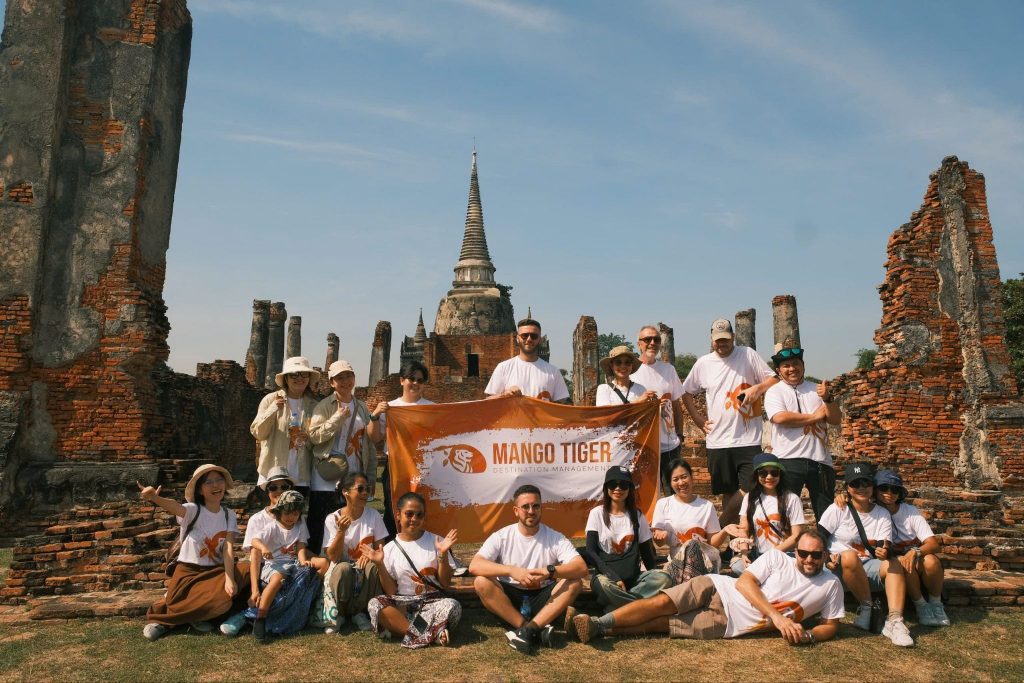
Mango Tiger is an Asia-based B2B Destination Management Company built on three values – Fresh, Authentic, and Passionate – operating across Vietnam, Cambodia, Laos, Thailand, Indonesia (Bali), and the Philippines. Our team designs group and tailor-made programs built around the people who call each destination home.
Our brand rests on three pillars: People, Places, and Products with Purpose – shaping everything from who leads a group on the Mekong to which guesthouse hosts them overnight. Explore our story on our about page or browse mangotiger.com/experiences.
Si Phan Don is one of the clearest examples of slow, purposeful group travel. Reach out at mangotiger.com/contact/ or lock in your dates at mangotiger.com/book-now/ – the 4,000 Islands are waiting, at exactly the pace your travelers need.
