
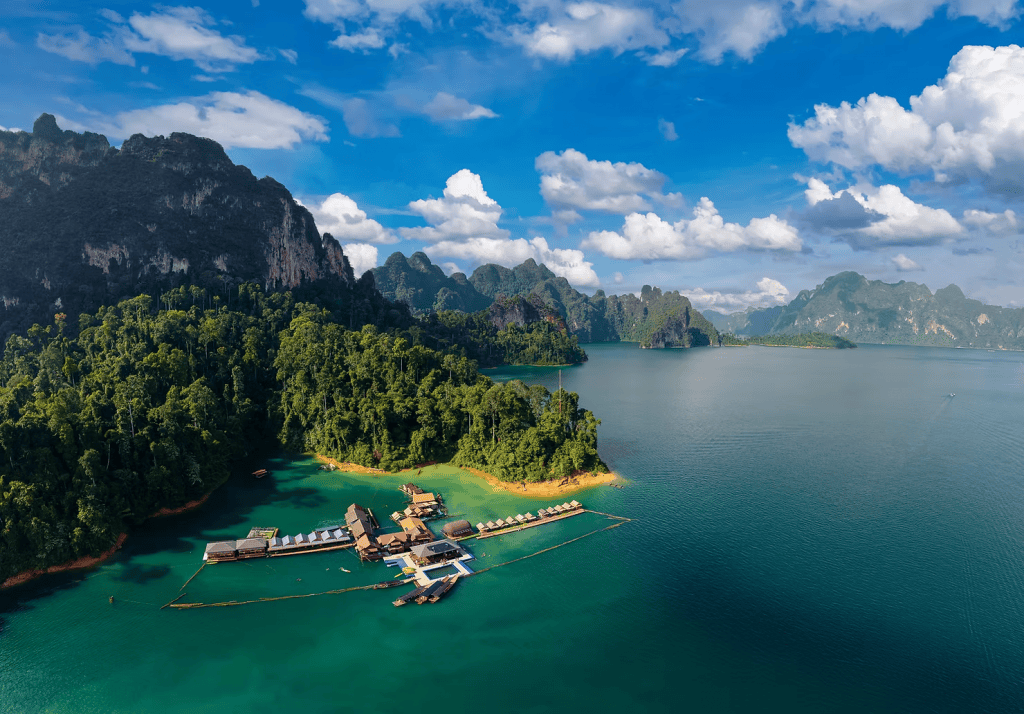
A particular kind of quiet settles over Khao Sok – cicadas ratcheting up in the heat, water lapping a raft house, something moving in the canopy you’ll never quite see. Deep in Surat Thani Province, this rainforest has been growing, uninterrupted, for an estimated 160 million years – older, by most measures, than the Amazon, according to Khao Sok’s own park research. Khao Sok National Park protects 739 square kilometres of that ancient forest, plus the limestone-studded expanse of Cheow Lan Lake, and it’s a place we return to whenever we want to show travellers what conservation-minded travel actually looks like.
1. Why Khao Sok Matters to Southern Thailand’s Ecosystem
Before the boats and bungalows, it helps to know what you’re walking into. This isn’t jungle scenery for the photo album – it’s one of the most biodiverse rainforest systems left in mainland Southeast Asia.
1.1 One of the World’s Oldest Rainforests
To understand why Khao Sok feels different from other tropical forests, it helps to go back further than most itineraries bother to. The numbers here are the reason ecologists keep returning to study this stretch of jungle.
- A forest older than the Amazon: A stable equatorial position for roughly 160 million years let Khao Sok’s rainforest survive ice ages that wiped out vegetation elsewhere, making it older and more species-dense than younger tropical forests.
- Officially protected since 1980: The park was gazetted on 22 December 1980 under Thailand’s Department of National Parks, Wildlife and Plant Conservation.
- Part of a 3,500 km² protected network: Combined with adjoining wildlife sanctuaries, the greater Khao Sok conservation zone exceeds 3,500 square kilometres – larger than Bali.
- Extraordinary plant density: Field surveys estimate up to 200 species of plants per hectare, among the highest densities recorded anywhere.
1.2 A Biodiversity Hotspot Worth Protecting
Spend a morning trekking here and you understand why guides tend to whisper. Nearly every rustle overhead or ripple in the water could be something rare.
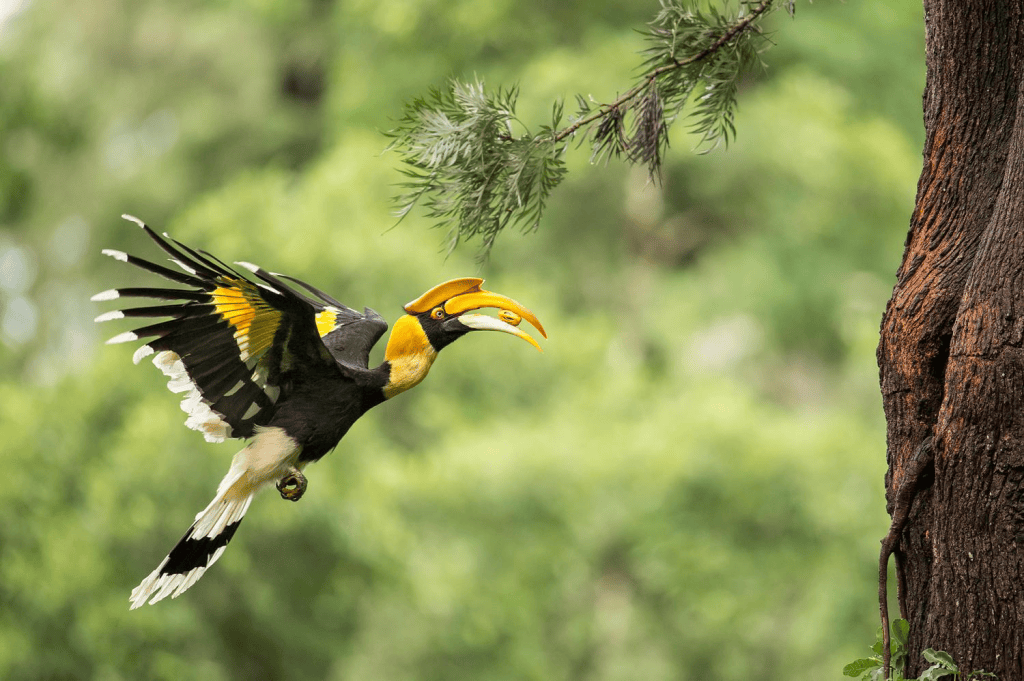
- Over 300 recorded bird species: More than 311 bird species live here, including several hornbills that serve as key indicators of forest health.
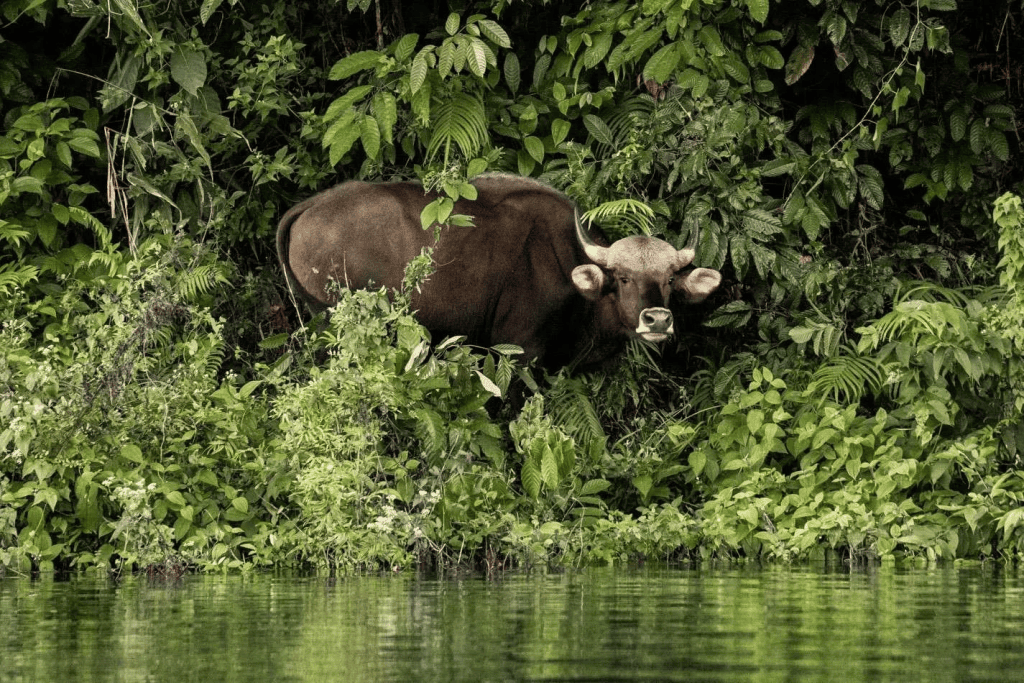
- Dozens of mammal species: Around 48 mammal species and 30-plus bat species share the park with wild Asian elephants, white-handed gibbons, sambar deer, and Malayan tapirs.
- The last refuge of the Asian arowana: Khao Sok’s waterways are considered the last natural Thai habitat of the endangered Asian arowana.
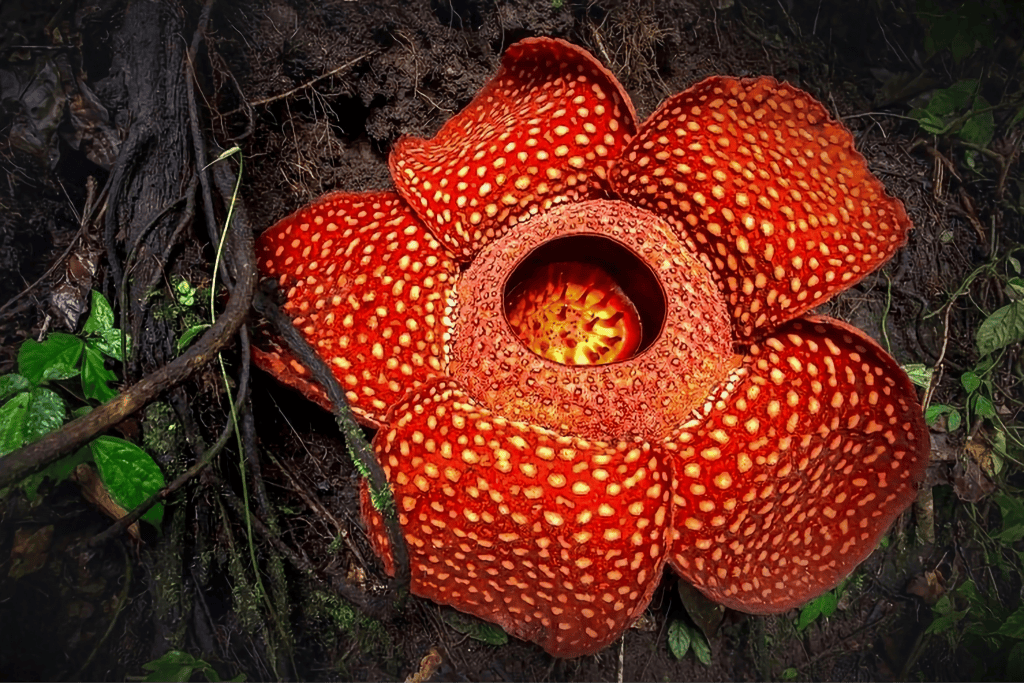
- The world’s largest flower: The park is one of the few places on Earth to see Rafflesia kerrii bloom – a parasitic flower nearly a metre across that opens for only a few unpredictable days.
Khao Sok isn’t scenic backdrop – it’s a living ecosystem you’re asked to help protect, not just photograph.
2. The Story Behind Cheow Lan Lake
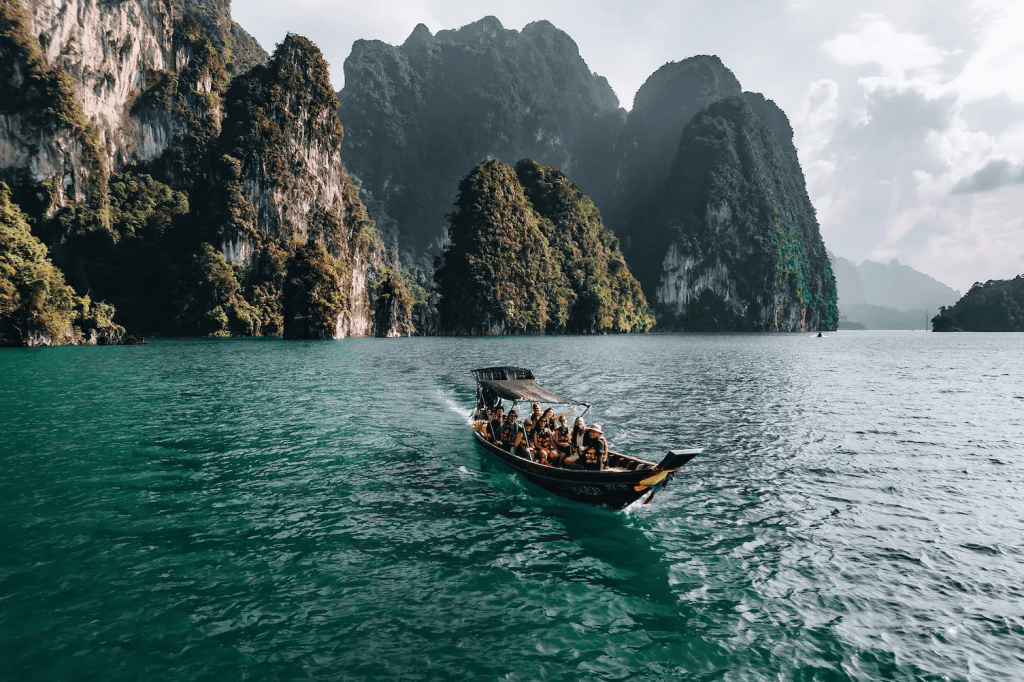
Cheow Lan Lake (also written Chiew Larn) is the postcard image most travellers already have in their heads – limestone towers rising out of jade-green water. Its origin as a hydroelectric reservoir, though, is a more complicated story worth knowing.
2.1 From River Valley to Reservoir
Before it was a lake, this was a river valley, with villages and forest where the water now sits. That doesn’t make the place less beautiful, but it adds a layer worth knowing.
- Built for hydropower, not tourism: The Ratchaprapha Dam was completed in 1982, standing 94 metres high and flooding the valley into a 165 km² reservoir that now powers southern Thailand.
- A landscape that took decades to recover: The flooding submerged river habitat and, per environmental studies, contributed to the loss of around 52 fish species that couldn’t adapt to the newly stagnant water – a reminder that this beauty came at a cost.
- Karst peaks that rival Halong Bay: What emerged is a lake studded with limestone towers often compared to Guilin or Halong Bay.
- A managed, working landscape today: The lake is now jointly overseen for hydroelectric output, flood control, and conservation.
2.2 Exploring the Lake Responsibly
There’s more than one way to experience Cheow Lan, and the difference matters – for how memorable the trip feels and how lightly it sits on the wildlife around it.
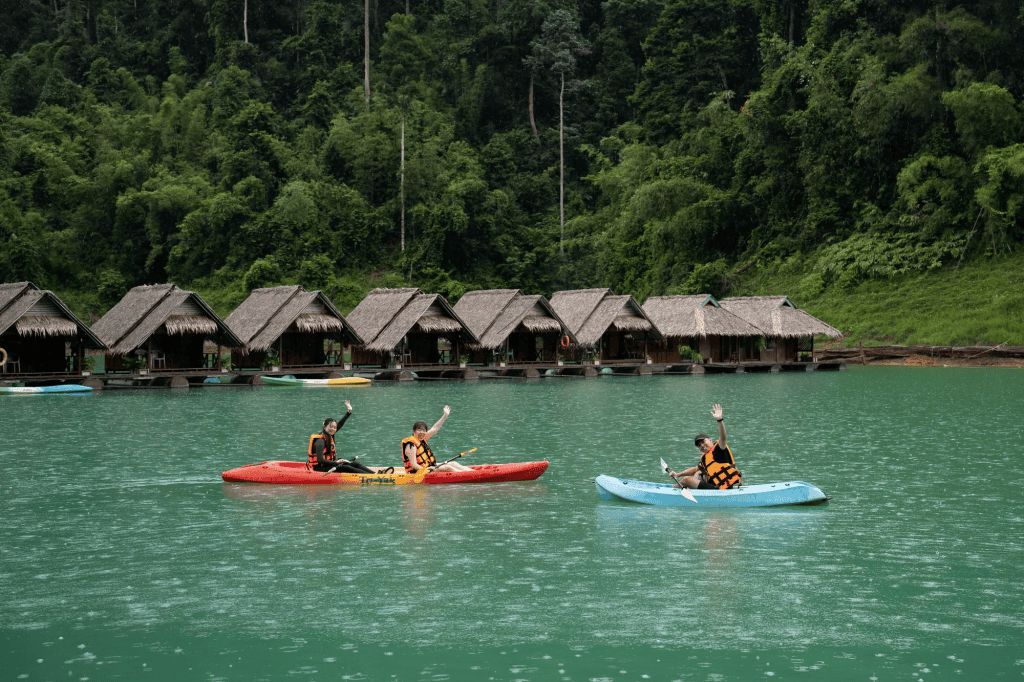
- Traditional long-tail boats and kayaks: A typical itinerary crosses the lake by wooden long-tail boat before switching to kayak for the hidden coves and karst formations, keeping engine noise low near wildlife-sensitive shorelines.
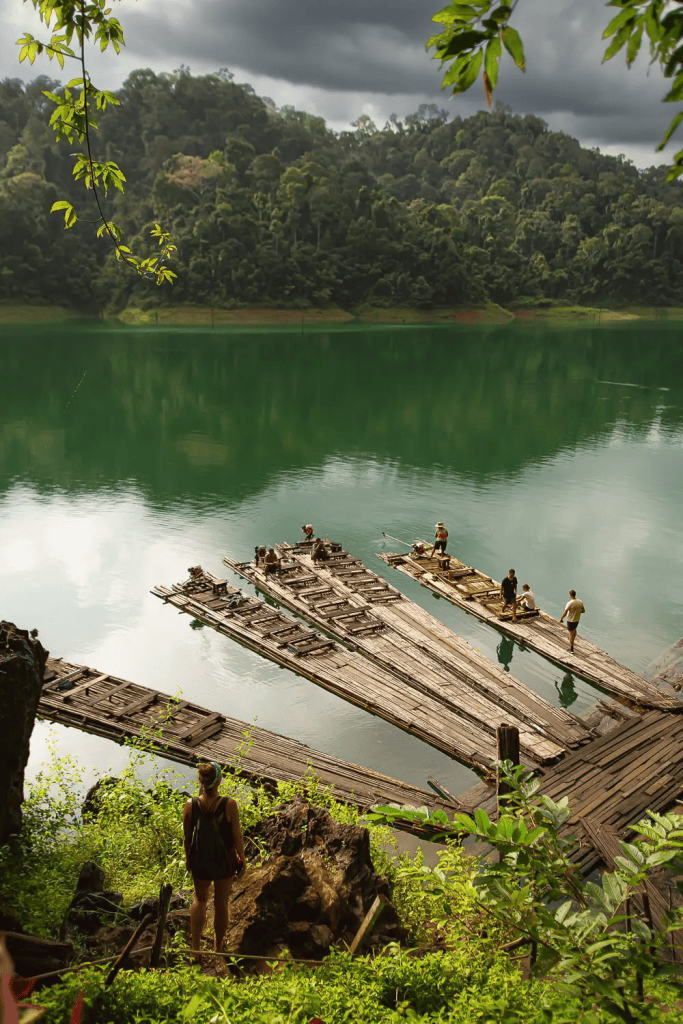
- Floating bungalows on the water itself: Guests overnight in traditional Thai raft houses built directly on the lake – an iconic, low-footprint style unique to Cheow Lan.
- Sunrise wildlife safaris: A dawn boat safari along the forested banks is timed for when wild elephants are most likely at the water’s edge, watched from a respectful distance rather than fed.
- Local boat operators as guides: Long-tail boats are typically owned and piloted by families from communities around the reservoir, so your fare stays in the village you’re passing through.
The lake’s beauty is inseparable from its history – knowing both turns a boat ride into a story worth retelling.
3. Wildlife Conservation on the Ground
This is where “meaningful travel” stops being a website phrase and becomes something you can see with your own eyes – real shifts in how animals here are cared for.
3.1 Elephants: From Riding to Rehabilitation
If you’ve read anything about elephant tourism in Thailand, you’ve read about the shift away from riding. Khao Sok is a good place to see what that shift actually looks like in practice.
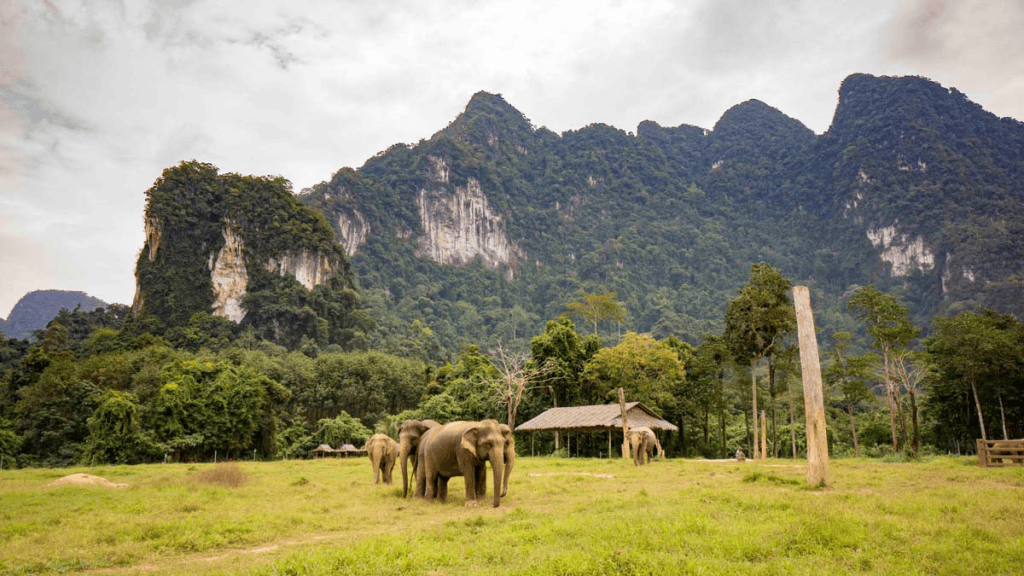
- A regional shift away from riding: Across southern Thailand, ethical elephant venues have moved from riding and performance toward observation, feeding, and care-based visits, following pressure from welfare groups and travellers alike.
- Therapeutic, not extractive, contact: A well-run Khao Sok itinerary treats a sanctuary visit as elephant “therapy” – mud treatments, wound care, no riding – followed by lunch on-site so revenue stays with the sanctuary.
- Wild sightings, not staged encounters: The park’s own wild elephant population, close to 200 individuals, is observed from a respectful distance during the sunrise lake safari rather than through captive interaction.
- A pattern that shows up across the region: This same welfare-first shift is one we’ve watched take hold across the full range of experiences we run in our other Southeast Asian destinations too.
3.2 Gibbons, Hornbills, and Forest Health
Not every conservation story here involves a large, dramatic animal. Some of the clearest signs of forest health come from creatures easy to miss.
- Gibbons as a forest health signal: White-handed gibbons are highly sensitive to habitat disturbance, and their continued presence in the canopy is treated by researchers as a proxy for overall forest condition.
- Hornbills and seed dispersal: Among the park’s 311-plus bird species, hornbills disperse rainforest seeds across huge distances, directly supporting regeneration.
- Rafflesia trekking with trained local guides: Because Rafflesia kerrii blooms unpredictably and briefly, spotting one depends on local guides who track bud locations – a skill passed down within nearby communities.
- Ranger-led monitoring: National park rangers conduct ongoing patrols and species monitoring inside Khao Sok, work that every park fee and permit helps sustain.
Every wildlife encounter worth having in Khao Sok is built around observation and care, never spectacle.
4. Community and Village-Based Travel Around Khao Sok
The communities around Khao Sok’s borders and Cheow Lan Lake are as central to this “restoring nature” story as the forest itself. Tourism revenue here funds livelihoods and conservation in ways you can trace if you know where to look.
4.1 Local Livelihoods Built Around the Park
Ask who actually benefits from a Khao Sok trip and the answer, done well, is refreshingly local. The families who make this place run are rarely on a brochure cover – but they’re worth asking about.
- Family-run raft house operators: Many floating bungalow operations on Cheow Lan Lake are small, family-run businesses – exactly the kind of local supplier worth seeking out when comparing where to book.
- Guides drawn from surrounding villages: Trekking and boat guides are frequently drawn from villages bordering the park, so entrance and guiding fees feed directly back into local household income.
- A national tourism strategy that favours this model: Thailand’s own 2026 “Value is the New Volume” tourism strategy promotes quality over quantity and community-benefiting distribution over mass-volume travel.
- Independent and flexible travel formats: For travellers going it alone or in small groups, our FIT and independent travel style lets Khao Sok slot naturally into a looser trip that can flex around lake weather and wildlife activity.
4.2 What Responsible Travel Looks Like Here
None of this is abstract. Responsible travel here comes down to a handful of concrete, checkable choices you can make before you book.
- Choosing accommodation with a local ownership stake: Floating bungalows and eco-lodges vary widely in how much revenue actually reaches local families, which is why our Thailand team vets each raft house partner personally.
- Respecting no-ride, no-feed wildlife rules: Reputable elephant and gibbon encounters now operate under clear no-riding, no-feeding, no-forced-interaction standards.
- Supporting park infrastructure through fees: National park entrance fees fund ranger patrols, trail maintenance, and reforestation, so official park channels contribute directly to conservation funding.
- Carbon-conscious trip design: Longer Thailand itineraries that include a stop like Khao Sok can be offset through Gold Standard Certified carbon projects, part of the impact goals we’re working toward across the region – a practical way to account for the travel it takes to get here.
Meaningful travel in Khao Sok isn’t a marketing label – it’s a series of specific, checkable choices about who gets paid, how wildlife is treated, and where the fees go.
5. The Mango Tiger Way in Thailand
Everything above takes people on the ground who genuinely care about getting it right. Here’s a closer look at who and what makes a Khao Sok trip with us feel different.
5.1 People with Purpose
Our Thailand team is built around people who came up through the country’s tourism industry, not around a script. Tao joined after the pandemic and became lead guide, now mentoring colleagues coming up behind him. Chompooh, based in Chiang Mai, noticed a gap in local family support and co-founded a community centre now home to up to 24 children, and works directly with us on new tours in partnership with local communities – the same instinct that shapes routes like Khao Sok. Nikki, based in Bangkok, spent years guiding before running our Thailand product line, giving the itineraries a former guide’s eye. Learn more about the team behind Mango Tiger.
5.2 Places with Purpose
Khao Sok earns its place on our Thailand programme because it resists being reduced to a photo stop. A 160-million-year-old rainforest, a lake with a complicated human history, and villages whose livelihoods depend on the forest staying intact – this is the layered kind of destination that defines Places with Purpose across all six of our Southeast Asian markets.
5.3 Products with Purpose
Our Phuket – Khao Sok & Islands programme, one of several tailor-made journeys we build across the region, is structured, stage by stage, to put money and attention where it matters: a private transfer to the lake, a night in a family-run floating bungalow, a sunrise wildlife safari timed to elephant behaviour, and a no-riding elephant sanctuary visit built around therapy rather than performance. It’s one template for how our Impact Experiences work – alongside wider commitments like our TonToTon partnership, which converts collected plastic into building materials for local housing and schools, and a growing Ecobrick programme in Hoi An, Vietnam, we plan to expand further.
About Mango Tiger
Mango Tiger is an Asia-based destination management company built to modernise inbound travel across the region, operating across Vietnam, Cambodia, Laos, Thailand, Indonesia (Bali), and the Philippines. The company designs its trips around three values – Fresh, Authentic, Passionate – and structures every itinerary through People, Places, and Products with Purpose.
For travellers planning a Southeast Asia trip they actually want to remember, Mango Tiger works as the on-the-ground partner who has already vetted the guides, lodges, and wildlife encounters – so what you book is what you get. Explore the full story on our About page or our Impact page.
Khao Sok is proof that a rainforest, a lake, and a handful of committed local partners can do more for a trip than any five-star checklist. Ready to build your own Khao Sok story? Get in touch to start planning, or head straight to book now to lock in your dates.
